Showing posts with label washington dc. Show all posts

Friday, January 10, 2014

Humanities Council Now Accepting Board Member Nominations

An Invitation to Serve, An Opportunity to Connect
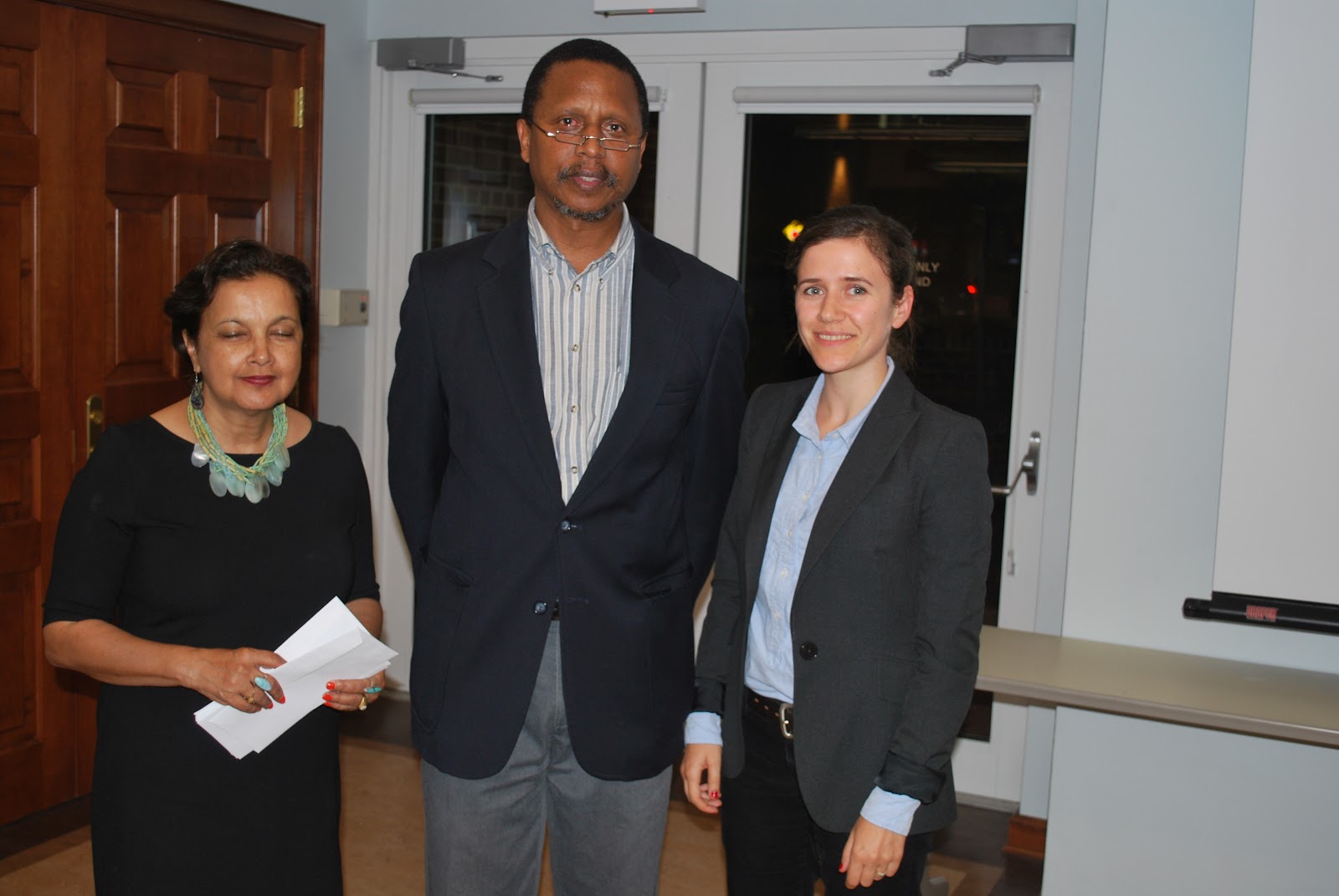
Board Chair Bradford Grant distributes grantee awards with
Executive Director, Joy Ford Austin (left).
The Humanities Council of Washington, DC seeks nominations to its Board of Directors. All nominees must be residents of the District of Columbia.  Nominations should be accompanied by: a resume and a letter explaining why the nominee would be a valuable addition to the Board.  Nominees can be recommended or self nominated.

Board Members are appointed for a three-year term, with re-nomination possible for a second term.  Commitments include
Stewardship of this 34 year old organization that provides humanities programs and grants to city residents 
Financial support
A passion for promoting the humanities

Benefits include outstanding opportunities to connect with people across the city who are civically engaged and enjoy participating in the city’s life.

In electing individuals to serve, the Council strives for geographical and ethnic representation, and for balance between academic and public spheres.  From the academic sector, the Board elects teachers, scholars, and educational executives. Public nominees represent a variety of professional backgrounds, including but not limited to business, labor, law, technology, public relations, and cultural and civic organizations.  Board Members serve without compensation.

Please e-mail your information by January 31st to:
Mr. Gregory Jefferson, Chair, Nominations Committee
Humanities Council of Washington, DC
 
The Humanities Council has a proven track record for sparking civic dialogue and reflection using the humanities disciplines. Centered in our Nation’s Capital, we reach over 250,000 citizens every year, including 17,000 children through our grants and programs,  The Council is an affiliate of the National Endowment for the Humanities; however it is a private, non-profit organization and not a federal or District agency. 

The mission of the Humanities Council is to enrich the quality of life, foster intellectual stimulation, and promote cross-cultural understanding and appreciation of local history in all neighborhoods of the District through humanities programs and grants.  The Humanities Council of Washington, DC transforms lives through the power of the Humanities..


Friday, March 30, 2012

City Government to Sponsor a Host of Emancipation Day Commemorations

City Officials Meet at African American Civil War Museum to Talk Sesquicentennial

Wednesday afternoon, Frank Smith stood before a class from Washington Christian Academy in Akron, Ohio and let them in on DC's secret about the Emancipation Proclamation - ours was first. Slavery was abolished in Washington, DC by the DC Compensated Emancipation Act nine months before Abraham Lincoln issued the Emancipation Proclamation that declared an end to slavery in all Confederate held territories. Smith, a former city councilmember, and current Executive Director of the African American Civil War Museum is an expert on the subject, which is likely why, after he'd answered the last of the Ohio students' questions, he was chosen to introduce Mayor Vincent C. Gray and Councilmember Vincent Orange as they kicked off the city's 150th Anniversary Celebration of Emancipation Day. 

Events are planned throughout the month of April, and Councilmember Orange ran through the list at yesterday's meeting, but there are too many to list here. Check out the DC Government's Emancipation Day website at emancipation.dc.gov to explore the many ways the community will bring people together around this historic occasion. Highlights include: lectures from historians C.R. Gibbs and Kate Masur; a Jazz Concert at the Lincoln Theater; a commemorative wreath laying ceremony; an authentic Civil War encampment; and a BET sponsored debate featuring Rev. Al Sharpton, and Michael Eric Dyson.

Gray presents certificate decreeing the 150th Anniversary of
Emancipation in Washington an official city holiday to Smith
and Orange.
The auditorium at the African American Civil War History Museum was packed with program partners, media members, and the interested public as Smith, Gray, and Orange took their places on the stage. Smith set the tone for the event by recounting the story of Robert Smalls; a man, born into slavery who escaped during the height of the Civil War, and whose famous service in the Union forces landed him a seat in Congress during the period of radical reconstruction. The inspirational story served as a reminder that, though we celebrate an act of compensated emancipation, true freedom cannot be given, it must be won.

Mayor Gray sought to link the remembrance of the 3100 slaves who were freed in on April 16, 1862, with the District's present struggle over home rule and voting rights. "We are still fighting this battle," offered Gray, meaning that, though slavery was abolished first in DC, a lack of representation still renders it's citizens less free than they should be. Gray hopes that the celebration of Emancipation Day will continue to grow, and will one day hold new meaning for Washingtonians as they city gains voting rights and increased autonomy from Federal authority.

Councilmember Orange spoke next announcing highlights from the incredible list of programs pulled together by the DC government and community partners. Take a look at the list of activities and let us know how you plan to celebrate this momentous anniversary. 

Thursday, January 12, 2012

The How and Why of Community History in Shaw

Footage in DC Digital Museum Archive Shows a Community Determined to Preserve its Heritage and Culture

The collection of the DC Digital Museum is diverse because it essentially reflects the Humanities Council's grantmaking activities since the organization was founded in 1980. Combing through the archive, has been a great way to get to know the city on a very human level. 

Sometimes researching and archiving a raw collection can be challenging and surprising at the same time. Earlier this week, we unearthed a couple of VHS cassettes labeled "Shaw Neighborhood History: The Whitelaw Hotel." A search in the old database brought up a record for these tapes that indicated they were copies of a documentary film on the Whitelaw and its relatively recent preservation as an apartment building. It seemed like a great topic for a documentary, and we were eager to digitize it, determine its creators and provenance, and make it available through the DC Digital Museum. 

We were disappointed at first to see that the tapes contained no such documentary. The footage was shot at the then newly renovated Whitelaw, but it was of a planning meeting, led by historians Kathy Smith and Marya McQuirter, involving residents and former residents of Shaw and the greater U Street Neighborhood. The audience had been brought together to discuss a planned history exhibit at what was to become the Thurgood Marshall Center for Heritage and Service; they were discussing how to best represent their memories as a historical narrative .

The footage is not just a record of the collective memories of Shaw community members, it is a fascinating text that shows how people seek to use the histories, preserved through memory, architecture, tradition, and human relationships, to actively pursue social improvement in the places that mean the most to them. 

The clip below represents only about one fifth of the conversation that occurred that evening April 10, 1996 at the Whitelaw. Please leave a comment if you or anyone you know participated in the planning meeting. What role does history have in Washington, DC's neighborhoods today? Is it different than it was 15 years ago?


The museum exhibit based, in part, on this community conversation is housed in the Thurgood Marshall Center for Heritage and Service at 1816 12th St, NW and is open to visitors during the day. Call (202) 462-8314 for exact hours.

The conversation also provided Smith and McQuirter valuable information as they compiled a guide to Shaw's Historical Resources, available in the DC Public Library's Washingtoniana Division.

Thursday, July 21, 2011

Sex, Scandals, and Social Media

First Event of the Fall 2011 Humanitini Series is a Big Hit

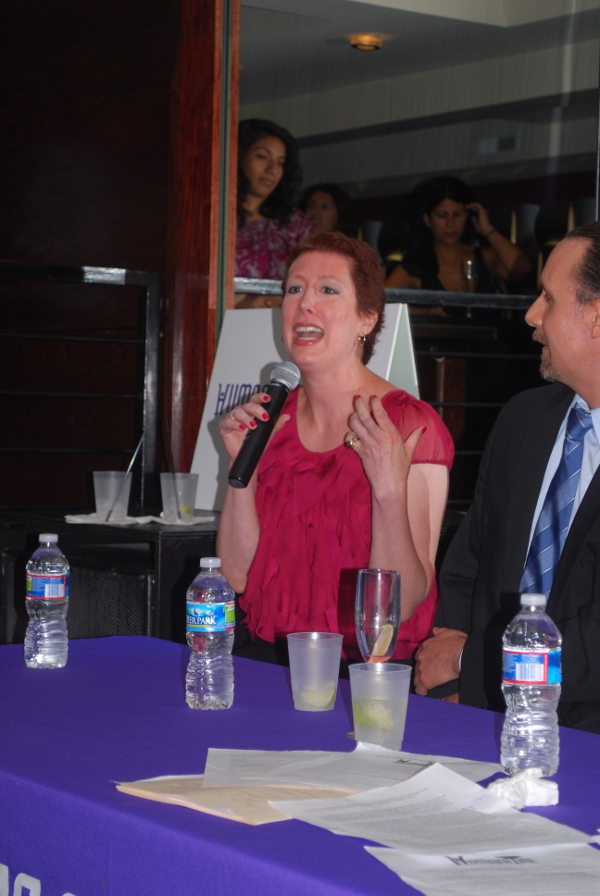
Last night, panelists Stef Woods, Peter Chirinos, Marc Sandalow, and Amy Argetsinger answered questions from moderator Amy Saidman and an engaged audience on sex, politics, and the media. Why do politicians think they can get away with saying one thing and doing another? What do we as a society find so intriguing about their missteps and disgrace? Is it news, or is it a guilty pleasure? Check out some of the images from the program which was held at Bar 7.

Amy Argetsinger of the Washington Post gets things started by addressing the newsworthiness of political sex scandals.

Journalist Marc Sandalow offered a list of past political sex scandals, and many from the audience immediately noticed that the chronicle was almost entirely composed of white men. What are some possible reasons for this apparent racial and gender imbalance?


The audience listened as therapist Peter Chirinos explained that political figures involved in sex scandals tend to get more satisfaction from their affairs the longer they persist.

Attorney and sex blogger Stef Woods asserted that Washington is still, in some ways, a very conservative city; uncomfortable with open discussions of sexuality.

There was plenty of time after the program for the audience to continue the conversation with the panelists over a beer - or, of course, a Humanitini!

The next Humanitini will be held on Wednesday, July 27 at Tabaq (1336 U Street, NW). The panelists will discuss the journey from gay and in the closet to activist for the LGBT community. Clarence J. Fluker of GLBT Affairs, Andrew Barnett of SMYAL, a representative from the Washington Blade, and Christopher Dyer of GLBT Affairs will be in attendance.


Monday, June 20, 2011

DC Community Heritage Project Symposium 2011

7th Annual Symposium to Highlight the Work of Former Grantees and Introduce New Digital History Techniques


The Humanities Council of Washington DC's annual Summer DC Community Heritage Project Symposium will be held Tuesday, June 28, from 6-8:30PM. The event will take place at the Deanwood Recreation Center and Library just across the street from the Deanwood Metro Station. This year's symposium is all about “making connections.” Each of the three sessions will explore opportunities for local history buffs to connect with each other and connect with the past.

The first session will introduce the local cemetery as an historical text. Conspicuous on the city-scape, yet secretive with their stories, cemeteries are often overlooked as a community history resources. Anne Brockett of the DC Historic Preservation Office and Tyrone General of the Historic Woodlawn Cemetery Perpetual Care Foundation will discuss how cemeteries can be coaxed into revealing the hidden heritage of a neighborhood, and the unknown stories of the deceased.

The second session will demonstrate a project that seeks to identify “neighborhood griots.” A griot is a person whose memory serves as a repository for a community's stories. Nearly every neighborhood has at least a few people who can draw on historical information passed down from generations, to enlighten, enrich, and educate those willing to listen. Historian Carrie Thornhill will discuss her efforts to identify neighborhood griots, and how her project can be replicated in other communities.

The third session will showcase software designed to help historians research, as well as organize and disseminate their findings. Sharon Leon of the George Mason University Center for History and New Media will discuss the growing field of digital history and will demonstrate some of the Center's valuable tools.

RSVP today for this FREE opportunity to learn how you can make connections with unorthodox historical texts, with others interested in community history, and with the living past! Register by visiting http://dcchpsymposium2011.eventbrite.com/, calling 202-387-8391, or emailing programs@wdchumanities.org.

Wednesday, February 2, 2011

Black History Month Reveals the Gaps in the Historical Narrative

Is History More Complete Since the Days of Dr. Carter G. Woodson?

Carter G. Woodson
February is Black History Month, and the history of its observance is central to Washington, DC with its tradition of African-American scholars and scholarship. In 1926, Carter G. Woodson launched Negro History Week with the Association for the Study of Negro Life and History (now the Association for the Study of African American Life and History). Woodson lived and worked in the District, and had incorporated the ASNLH there 11 years earlier. He believed that mainstream education functioned as propaganda lifting the history and culture of Europeans over that of others. In a letter to Thomas A. Barnes justifying the ASNLH creation of a home study department, Woodson wrote:

“The fact is that the so-called history teaching in our schools and colleges is downright propaganda, an effort to praise one race and to decry the other to justify social repression and exploitation. The world is still in darkness as to the actual progress of mankind. Each corner of the universe has tended to concern itself merely with the exploits of its own particular heroes. Students and teachers of our time, therefore, are the victims of this selfish propaganda.”

Carter G. Woodson House, Washington, DC
Courtesy: Historical Society of Washington, DC
Woodson was the first child of enslaved parents to receive a PhD. from Harvard University, but was barred from teaching at his alma mater because of his race. He spent his post graduate years teaching in public schools before joining the faculty at Howard University. He was familiar with the U.S. education system at all levels when he created Negro History Week, and was determined to return blacks to the American historical narrative. In 1972 the name and scope of the celebration was changed to Black History Month.

During the past two or three decades, many scholars, educators, and journalists have challenged the relevance and validity of the observance, charging it with tokenism, exploitation, and intellectual segregation. The most common critique is that by relegating African-American history to a single month, it gives us license to ignore it for the other eleven. Some have written that Black History Month is used as a mere marketing tool; businesses put out banners, display photographs of Martin Luther King, Jr., and expect that their contributions will be rewarded with improved public sentiment. This collective empathy is central to the final criticism – that Black History Month is an empty obligation that makes us feel good and assuages guilt, but lacks any substance (largely attributable to the effects of commercialization). 

These arguments are likely all valid in some capacity, but their authors' desire to spot broad social trends often renders the actual accomplishments of Black History Month invisible. Negative reviews of Woodson's creation regularly overlook his original intentions, fail to evaluate whether those intentions are actually being achieved, and almost never suggest alternatives. 

Black History Month does not encourage the inclusion of an alternate historical narrative. By setting some time apart each year to study that separate narrative exclusively, it shows us that the accepted version of American history is quite incomplete without it. Highlighting black history for a set period emphasizes its absence elsewhere, but Black History Month does not cause this absence, it cries out for a remedy. 

Since its founding, but especially since the beginning of its nation-wide observation, Black History Month has gradually begun to fill the gaping holes in American history observed by Woodson in the 1920s. Recently, the Humanities Council of Washington, DC has featured some of its materials related explicitly to African-American history on HCTV and the DC Digital Museum catalog, but they are just two or three out of hundreds that could have qualified. Thanks to Washingtonian, Carter G. Woodson, and his insistence that we pay special attention to Black History for a dedicated period out of each year, few HCWDC grantees have been able to produce projects that exclude it; we simply cannot tell a story without including revelations gained from Black History Months past. Granted, DC has a unique history; for many years it has had a majority black population, and was home to free blacks before the Civil War. The fact remains, however, that Woodson and the ASNLH saw the need for improved black history education based primarily on their observations in the nation's capital. 

In 2011, the HCWDC (and likely many other cultural institutions around the country) would be hard-pressed to relegate emphasis of African-American history to a single month, but in the interest of advancing Woodson's cause and contributing to a still woefully incomplete mainstream narrative of American history, beginning tomorrow, we will highlight select items from the DC Digital Museum. Don't be surprised though, if the series outgrows February!

Friday, January 21, 2011

One Common Unity's MLK Streets Project

HCWDC Board Member Aaron Jenkins Reflects on the Film Premiere

Aaron Jenkins

The following is an excerpt of comments from Aaron Jenkins describing his experience with the piece, "MLK Streets" project:

"I wish you were all in the room when the film was screened at the Anacostia Library the day after the ice storm last week. Even with inclimate weather, it was a full house. The project provided young people with cameras and after taking workshops they traveled to Dr. Martin Luther King Jr. named streets across the country gathering personal stories of what the street means in each city to residents. It was a great reminder of why we are all committed to this work of making the humanities, or human ties, available to as many people as possible. The screening was a "rough cut" version but it did everything we set out to do in our work - it brought community members together and provided a vehicle to discuss important issues. I cannot wait to see the final screening on April 4th, 2011. This is a powerful day as it's the anniversary of Dr. King's assassination." 

One Common Unity is a 501(c)3 non-profit organization striving to create and nurture sustainable communities through the arts, education, and media. The premiere of the MLK Streets Project Documentary, funded in part through a 2008 Major Grant from the Humanities Council of Washington, DC, received press attention from: CNNBBC America, and the Washington Post


Congratulations to OCU and all of the project participants!

Thursday, January 20, 2011

Don't Let the Traffic Grind You Down

Transcend Road Rage With Classic Literature

Warning: Road Rage
Source: http://www.thefishbowl.co.uk
Despite a highly regarded public transportation system, an impressive number of bike lanes, and popular carpooling incentives, the DC metro area is now tied with Chicago for the worst traffic congestion. As if sitting in a parking lot for hours on your way to work wasn't enough, it seems that DC drivers are also increasingly prone to road rage. If you aren't being cut off, honked at, or gestured toward during the daily commute, its likely that your built-up frustrations and added stress are causing unseen internal damage to your heart and mind. But, as they often do in times of crisis, the humanities have come through with a much needed healing salve. Improve your quality of life on the road by enjoying a free audiobook! Literature can save you from mind-numbing boredom or soul-crushing frustration in the gridlock, and it provides both an escape from reality, and a better understanding of the world.

Librivox.org is perhaps the largest project dedicated to creating audiobooks out of public domain literature. Volunteers choose works with expired copyrights, record them, and upload them to the website. The project welcomes volunteers from around the globe, and many of the materials in their catalog are recorded in multiple languages. Because of the loose, Wikipedia-like strategy of Librivox, there are plenty of books to choose from, so you can make your escape from afternoon drive DJs and double parked cars in a variety of ways. Some examples from the catalog include: Mark Twain's “A Connecticut Yankee in King Arthur's Court”, Geoffery Chaucer's “The Canterbury Tales”, or 8 different versions of Leo Tolstoy's “Anna Karenina.”

If you get a chance to try Librivox, send a comment to let us know what you are reading. If you search their catalog and can't find the public domain book you are looking for, find it here, at Project Gutenberg, and follow the instructions here to introduce it to the Librivox catalog.

Wednesday, January 12, 2011

DC's 2011 Most Endangered Buildings List

DC Preservation League Seeks Nominations


The 3rd Church of Christ Scientist building at
16th and Eye St, NW made the list in 2008
The DC Preservation League is accepting nominations for its 2011 most endangered list. Since 1996, the Preservation League has annually compiled a list of culturally or architecturally significant buildings that are threatened by demolition, irresponsible redevelopment, or neglect. Last year's nominees included: Metropolitan AME Church at 1518 M. Street, NW; a collection of historic homes comprising parts of Historic Anacostia; and DC's historic fire houses. The Preservation League testifies before the DC Historic Preservation Review Board to encourage protection of the structures it identifies as significant.

If you are interested in preserving a piece of the built environment, nominating a structure for inclusion on the annual Most Endangered list is a good start. For more information visit the DC Preservation League website.

Tuesday, January 4, 2011

Mayor Gray is a Hand Dancer

Washington Post Article foresees a popularity spike for DC's Official Dance

Hand Dance holds the distinction of being Washington, DC's official dance according to a 2003 city council resolution sponsored by Phil Mendelson. A recent article in the Washington Post written by Nikita Stewart, indicated that the dance style's popularity may get another boost from the local government. It seems that recently elected mayor Vincent Gray is an avid hand dancer, and has been practicing the art form since his childhood. According to the article, Gray, who grew up in Northeast Washington, showcased his talents throughout his campaign. His dedication to hand dance could spark a revolution among DC dancers young and old. Some may hope to preserve the dance and the traditions it represents, and some may see it as an entrée to the local culture and community of which they hope to be a part.

The Humanities Council of Washington, DC awarded a 2010 DC Community Heritage Project grant to Beverly Lindsay-Johnson and the National Hand Dance Association for a documentary surveying the history of this descendant of the Lindy Hop and Jitterbug. The film, entitled Hand Dance: a Capitol Swing, was the result of an August 8th  oral history interview session that featured some of the most notable names in DC Hand Dance. The entire finished product is available through the Humanities Council's DC Digital Museum and Youtube channel. Lindsay-Johnson is also the producer of Dance Party: the Teenarama Story, a documentary film about Washington, DC's Teenarama dance program of the 1960s. The show was open to African-American youth unlike many of its contemporary counterparts. 

As Ms. Stewart demonstrates in her article, shared cultural traditions do not always function as bridges across generational and racial boundaries – not at first. But there also seems to be significant evidence that the world of hand dance holds a lot of potential. Like differing interpretations of a good book, the multitude of ways DC residents have adapted hand dance are likely to fuel debate and discussion among dedicated dancers and newcomers alike. Perhaps those discussions will be limited to the beat of the music, and the occasional trash talk challenge, but the longer people from differing backgrounds spend together, the more likely they are to find common ground.