Showing posts with label History. Show all posts

Thursday, September 25, 2014

World House: Fostering a Global Citizen

by Claire Salinas, History Scholar and Humanities Council Programs Volunteer


In 1967, Martin Luther King challenged Americans to see themselves as dwellers in a “world house” of international neighbors, “a world-wide fellowship that lifts neighborly concern beyond one’s tribe, race, and class.” First evoked in his 1964 acceptance speech for the Nobel Peace Prize, the vision of a “World House” called for a more peaceful society in which the pursuit of justice transcended the boundaries of local belonging. To end “the triple evils of racism, poverty, and militarism” on a global scale both demanded and forged, inexorably, a global citizenry.

Five decades on, it is a commonplace to describe our 21st century world as inter-connected, shaped by the global currents of trade, communications, militarism, and political protest. What, then, are the implications of global citizenship in 2014? Are we all global citizens by virtue of living in this era, or does the notion imply a more intentional outlook and fundamental shared ethical values, such as those Dr. King ascribed to it?

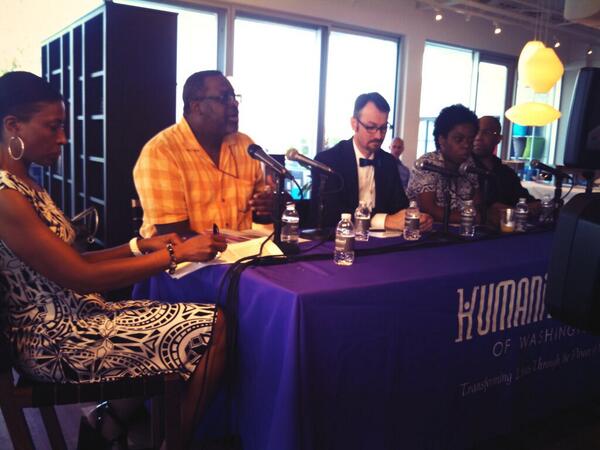
We think these questions resonate especially deeply in the international, globally-connected city that is DC, with its well-travelled inhabitants. And we want to hear from you! What does being a global citizen mean to you? In what ways do you consider yourself to be a global citizen? To start thinking about these issues, have a look at the short reading and questions below, and leave us your comments, questions, and reactions. Then join us for the discussion with panelists Rachel Weiner, Elizabeth Ogunwo, both former Peace Corps volunteers, and GWU Anthropology professor Robert Shepherd. Let’s start a global dialogue!

When: October 16, 6:30-8:30pm
Where: The Coupe (3415 11th St NW)

1.      What are some of the attributes of the global citizen? What role does travel play in shaping global citizens? What are the benefits of being a well-travelled person, and how does it increase our understanding of, and concern for, humanity?
2.      Do global citizens have a responsibility to uphold common humanity and dignity on a global scale? Do the world’s wealthy citizens (Americans and others) have an ethical duty to end extreme inequities and injustices, such as poverty and racism?
3.     What must we teach students and others to make them truly and effectively globally connected, and able to interact easily and skillfully anywhere and with anyone?

4.     What does studying or promoting the humanities bring to being a world citizen?


Friday, September 13, 2013

HCWDC Funded Documentary to Air on WETA, Monday September 16

"The Bayou: DC's Killer Joint" documents the history of an iconic DC night club and music venue!

On Monday, September 16, the memory of one of DC's most storied music venues will be resurrected on the small screen! Tune in to WETA at 10pm EDT to watch this Council-funded documentary! 

Check out the full documentary description on the producers' website, or read the Washington post review!

Tuesday, July 2, 2013

A Few Thoughts on Last Week's DC Community Heritage Project Symposium

Insightful commentary on last week's event from Humanities Council Grants and Special Projects Intern, Sneha Sharma

Washington D.C. residents don’t always have all that much in common with one another. They come from different cultures, backgrounds, and hold a diverse array of professions. Some residents have lived here their whole lives and others just moved in. Often, one of the only things these residents hold in common with one another is the history that surrounds them. Washington D.C. has a rich and extensive history that visually reveals itself through the mix of old and new architecture and the plethora of museums. In order to find a collective sense of community, residents ideally should understand this shared history. 

Not only did the panelists at last week's DC Community Heritage Project Symposium address these abstract ideas, they also discussed the importance of architecture and urban planning in relation to community. Throughout history, racism and rising property prices displaced residents and disrupted any shared sense of community that previously existed. In the present society, residents’ common knowledge of these past events can strengthen their understanding of the community and of each other. Since all the panelists possess strong community ties, they ably discussed how their interactions and work within the community improved when residents identified with their community’s history. Through their statements during the discussion, these panelists all reinforced the idea that a community’s history is always relevant to the present residents whether these residents have been here for five or fifty years. 

After the discussion, I realized that these speakers would never have come together if not for the city’s history that they are all so invested in. This demonstrates the strong sense of community that history can help create. The panel itself was well attended and was followed by a Q and A session where some attendees voiced their personal experiences and opinions in relation to the discussion topic.

(Sharma is a student at The University of California Riverside and is currently studying at the University of California DC Center)

Friday, June 8, 2012

Public Screening of "African American Pioneer Muslimahs in Washington, DC Part One!"

A Fascinating Look at the Lives of Muslim Women in DC


From a Press Release...

This one-hour screening is a fundraiser for POI television featuring the 50 + years journeys of three women (Sisters Baseemah Beyah, Aidah N. Sabir, and Shukriyyar T. Nisar) in their 80s and 90s. They each left South Carolina for Washington, DC as members and singers in the church and transposed their lives by joining the Nation of Islam and later all making their pilgrimage to Mecca as Muslims. These extraordinary, three ladies will be our featured guests for a question and answer segment after the viewing.

A donation of $20.00 per person over 10 years old and $10.00 per person over 65 years old is requested. However, If you cannot attend this exciting event, contributions can be made payable to the African-American Holiday Association, the fiscal agent and 501©3 organization financially handling this POI project. Please send c/o Z Productions, P.O. Box 77344, Washington, DC 20013. We have begun to work on Part Two, so we can continue to tell our stories.

Refreshments will be served before the screening and several, women business vendors will be available before and after the showing. Please try to RSVP and for further questions, directions and/or information call 202-302-4708 or contact zasha121@yahoo.com.

At the Rumi Forum, 1150 17th Street, NW, Fourth Floor,

Near M Street, NW across the street from the National Geographic Bldg.

On Sunday, June 10, 2012, 3:00 to 6:00 pm


Friday, April 27, 2012

Author Reading at The Arts Club of Washington

Don't Miss This Enlightening Grantee Event

Event:  

Date & Time:  
Wednesday, May 9th at 7:00pm

Location:  
The Arts Club of Washington / 2017 I Street, NW / Washington, DC / 20006

Description:   
Yaël Tamar Lewin, winner of the Sixth Annual Marfield Prize National Award for Arts Writing, will present a free public reading from her prize winning biography, Night's Dancer: The Life of Janet Collins (Wesleyan University Press: 2011) . Night's Dancer chronicles the career of Janet Collins (1917-2003), a classical and modern dancer who in 1951 became the first African-American prima ballerina with the Metropolitan Opera Ballet. She also worked with influential Lester Horton and Katherine Dunham; taught at George Balanchine’s School of American Ballet; and appeared in films and on Broadway for Agnes de Mille and Hanya Holm.

Beginning with Collins’ unfinished memoir detailing her early life, Lewin continues the fascinating portrait of the pioneering dancer, drawing on her own extensive research and interviews with Collins and her family, friends, and colleagues. Lewin is a dance historian, writer, and dancer living in New York. This program was funded in part by a grant from the Humanities Council of Washington, DC. Book signing and reception to follow. 

Tuesday, April 17, 2012

Today in the Humanities... A History Resource for Students, Cambodian Archaeology, and Pulitzer History

Humanities Stories from Around the Globe to Pique Interest and Spark Conversation!


Patrick Awuah makes the case that a liberal arts education is critical to forming true leaders.


A major stop for runaway Southern slaves, Washington, DC, attracted large numbers of blacks after the Civil War. By 1960 the city had a majority black population. The presence of black political organizations and the large marches in the 1960s made Washington a major center of the civil rights movement. Today it is one of the largest and most prominent black-dominated communities in the United States.


Count Basie and Bob Crosby
at the Howard Theatre,
Gottlieb Collection, Library
of Congress
George Clinton surveyed the crowd Tuesday night and let out a soulful sigh: “Boy, do I have memories in this joint!” The legendary purveyor of funk, looking notably tidier sans his equally legendary Technicolor dreadlocks, took the Howard Theatre stage at the historic venue’s VIP grand opening concert and celebration following a $29 million renovation.


A team of young archaeologists from the Faculty of Archaeology at the Royal University of Fine Arts and from the Royal Academy of Cambodia initiated a yearlong project that combined: excavation, cultural resource management and the construction of a museum in order to preserve, document and disseminate information about the rich cultural heritage of the Sre Ampil site.


The Humanities Council [of North Carolina] has been revisiting the notion of The American Dream. During this process we decided to take the conversation outside (literally) and engage folks in conversation around this broad but universally relevant topic. 


“Pulitzer history, of sorts, was made this year when the Pulitzer Board announced that no prize for fiction would be awarded this year,” says Corrigan, who has been published in the New York Times, written a book and writes a mystery book column for the Washington Post.

Tuesday, April 3, 2012

Don't Let the History of Your Neighborhood be Lost

Apply for a DC Community Heritage Project Grant

For the past five years, the Humanities Council of Washington, DC (HCWDC) has made over 80 grants to citizens and organizations interested in preserving the heritage of the city’s unique neighborhoods, landmarks, and culture through the DC Community Heritage Project (DCCHP). The DCCHP is a collaborative effort of the Humanities Council of Washington, DC, the DC Historic Preservation Office, and the DC Commission on the Arts and Humanities. This year, HCWDC will maintain its commitment to preserving local history and culture, by investing in neighborhoods that have not yet had their stories told.

In recent years, D.C. has become a renaissance city, through an influx of buildings, monuments, and newly minted Washingtonians. With all this change, struggles in reconciling the old with the new are inevitable. As such, we are encouraging residents, long-time or newly-arrived, to preserve the histories they have come to appreciate.

Communities can have a powerful connection to the local school house, or the neighborhood church because of the powerful memories associated with these structures. A particularly cruel teacher or benevolent pastor are experiences shared by a group of people and talked about for years, that can eventually be raised to the level of local legend. When those memories are tied to a historic structure, the very character and culture of a neighborhood can seem to hinge on that building’s preservation. In 2009, Deanwood Heights Mainstreets produced their first walking tour of Deanwood's churches entitled “Faith and Foundation.” The group has received subsequent grants to document more houses of worship, and has added other historic Deanwood landmarks to the tour.

In 2010, Historic Mt. Pleasant Inc. combed the local archives to produce a survey of their neighborhood's historic storefronts from 1901-1938. The database they compiled includes ownership transfers, businesses operated, and architectural changes. The data reveals a past Mt. Pleasant dizzy with change and population growth, but it is open for interpretation, and available in full on Historic Mt. Pleasant's website.

But it is not just in the bricks and mortar of the cityscape that collective memory resides. In fact, the most powerful, yet ephemeral local histories reside in the minds of those who have lived them. These are the types of histories best preserved through oral history interviews. In 2007, Empower DC organized an oral history project that captured the memories of long time residents of Ivy City. The tapes revealed strong remembrances of the historic Crummell Elementary School, an endangered historic landmark and the focal point of the community. Empower DC has since expanded the oral history project and has produced a draft documentary film.

In 2009, Tendani Mpulubusi and Helping Inner City Kids Succeed produced an extraordinary documentary film on Barry Farm that explored the community's history and examined its present-day challenges. Barry Farm: Past and Present used interviews with scholars, community historians, students, and community leaders to tell a thoughtful and textured story about one of Ward 8's most historic neighborhoods.

The DCCHP seeks to preserve both the physical and the intellectual heritage of Washington’s neighborhoods. Last year, students and educators from John Eaton Elementary School used a grant from the DC Community Heritage Project to fund a study of the school's past. Students used architectural clues, oral history interviews, and archival research to piece together the history of Eaton Elementary and the surrounding portions of the Cleveland Park neighborhood. The project coordinators used the experience to create a lesson plan that they hope will be replicated by other schools in the District and across the country! The student history detectives were invited to present their findings at last year's 38th Annual DC Historical Studies Conference.

The ultimate goal of the project is to provide the skills and financial means for every neighborhood in Washington, DC to make its history known. We welcome new concepts from neighborhoods already reached by the DCCHP, but we need proposals from communities such as Trinidad, Lamond-Riggs, Lincoln Heights, Brightwood, and others that have not received a grant. Any DC resident with a story to tell about their community is encouraged to apply.

We strongly encourage first time applicants to attend one of our grant workshops. To register for a DCCHP Grant Workshop, please visit http://www.wdchumanities.org/grants/deadlines

Friday, March 30, 2012

City Government to Sponsor a Host of Emancipation Day Commemorations

City Officials Meet at African American Civil War Museum to Talk Sesquicentennial

Wednesday afternoon, Frank Smith stood before a class from Washington Christian Academy in Akron, Ohio and let them in on DC's secret about the Emancipation Proclamation - ours was first. Slavery was abolished in Washington, DC by the DC Compensated Emancipation Act nine months before Abraham Lincoln issued the Emancipation Proclamation that declared an end to slavery in all Confederate held territories. Smith, a former city councilmember, and current Executive Director of the African American Civil War Museum is an expert on the subject, which is likely why, after he'd answered the last of the Ohio students' questions, he was chosen to introduce Mayor Vincent C. Gray and Councilmember Vincent Orange as they kicked off the city's 150th Anniversary Celebration of Emancipation Day. 

Events are planned throughout the month of April, and Councilmember Orange ran through the list at yesterday's meeting, but there are too many to list here. Check out the DC Government's Emancipation Day website at emancipation.dc.gov to explore the many ways the community will bring people together around this historic occasion. Highlights include: lectures from historians C.R. Gibbs and Kate Masur; a Jazz Concert at the Lincoln Theater; a commemorative wreath laying ceremony; an authentic Civil War encampment; and a BET sponsored debate featuring Rev. Al Sharpton, and Michael Eric Dyson.

Gray presents certificate decreeing the 150th Anniversary of
Emancipation in Washington an official city holiday to Smith
and Orange.
The auditorium at the African American Civil War History Museum was packed with program partners, media members, and the interested public as Smith, Gray, and Orange took their places on the stage. Smith set the tone for the event by recounting the story of Robert Smalls; a man, born into slavery who escaped during the height of the Civil War, and whose famous service in the Union forces landed him a seat in Congress during the period of radical reconstruction. The inspirational story served as a reminder that, though we celebrate an act of compensated emancipation, true freedom cannot be given, it must be won.

Mayor Gray sought to link the remembrance of the 3100 slaves who were freed in on April 16, 1862, with the District's present struggle over home rule and voting rights. "We are still fighting this battle," offered Gray, meaning that, though slavery was abolished first in DC, a lack of representation still renders it's citizens less free than they should be. Gray hopes that the celebration of Emancipation Day will continue to grow, and will one day hold new meaning for Washingtonians as they city gains voting rights and increased autonomy from Federal authority.

Councilmember Orange spoke next announcing highlights from the incredible list of programs pulled together by the DC government and community partners. Take a look at the list of activities and let us know how you plan to celebrate this momentous anniversary. 

Thursday, March 29, 2012

DC's "Native Son" returns to the Howard Theatre

Check Out Footage From This Morning's Statue Unveiling


As the opening for the historic Howard Theatre nears, a 20-foot tall, 10,000 pound statue of American Jazz legend, Edward Kennedy "Duke" Ellington arrived Thursday morning. The statue was installed on a granite base in the shape of a piano, and serves as the marquee for an aptly named Ellington plaza that fronts the restored Howard Theatre.

Sculptor Zachary Oxman, a DC native is the artist who was commisioned to create the sculpture by the D.C. Commision on the Arts and Humanities. Zachary named the sculpture "Encore," and it is certainly an appropiate and permanent encore indeed.

Check out reporter Will Thomas of Fox 5 DC interview Zachary here:

Duke Ellington Statue Set into Place in DC Neighborhood: MyFoxDC.com


Friday, March 16, 2012

From the DC Digital Museum... Howard Theatre: A Class Act

1985 Film Illustrates the Historic Howard Theatre's Prominence in the Shaw Neighborhood's Collective Past

In just a little less than a month, the famed Howard Theatre at 620 T Street, NW will reopen its doors for the first time since the 1980s. The venue was once the site of performances by the likes of Pearl Bailey, Roberta Flack, and Washington's native son -- Edward Kennedy "Duke" Ellington. 

The theater was founded in 1910 and contributed to the Greater U Street area's emergence as a hotbed of nightlife and entertainment. The Howard was DC's answer to Philadelphia's Pearl and New York's Apollo, and during the theater's heyday, U Street famously became known as "Black Broadway."  

When segregation ended in Washington, and many middle-class African American families began patronizing downtown businesses for the first time, the popularity of the Howard began to wane. The theater's decline quickened following the 1968 Riots in the wake of the assassination of Martin Luther King, Jr. The Howard closed its doors in 1970, but the Howard Theater Foundation, a group dedicated to restoring and reopening the venue, was organized just three years later; an eagerness that seems to demonstrate how large the theater loomed in the memory of the community.

The Foundation was briefly successful, and the Howard reopened and played host to a number of significant R&B acts and became very important to DC's local Go-Go scene throughout the 1970s and into the 80s, but was eventually forced to close again. But even as it's once great facade began to crumble and fade, it remained an important symbol of pride for the longtime residents of the Shaw and Greater U Street communities. 

In the mid eighties, the Humanities Council funded a documentary film entitled, "The Howard Theater: a Class Act." The documentary traced the history of the venerable old building and outlined contemporary efforts to restore it. The film is now part of the DC Digital Museum and is available for loan. 


In 2010, the longtime mission of Howard Theater Restoration Inc. became was realized. Then DC Mayor Adrian Fenty was on hand as the group broke ground on a multimillion dollar restoration project headed by Ellis Development and Whiting & Turner Construction. The recently completed renovations included a full reconstruction the 1910 facade giving the theater the same majestic appearance it had when it opened its doors over 100 years ago.

On April 9, 2012, the Howard Theatre will hold a community day during which they hold a ribbon cutting, officially opening the restored facility. That event will be free and open to the public. The festivities will continue with a grand opening gala and benefit concert on April 12th to raise funds for the Howard Theatre Culture and Education Center. 

Wednesday, March 7, 2012

Today in the Humanities... Civil War Music, Historic Woodlawn Cemetery, and the Poetry Out Loud DC Finals

Humanities Bites from DC and Beyond!

The exhibition features selections from a recently acquired collection of music published in the Confederacy during the Civil War. Sheet music lyrics and imagery are documentary sources that provide insight into the mindset, values, and beliefs of their creators and consumers. 


Commemorate Holocaust Remembrance Day with a special evening of spoken word and music.  Poet and writer, Davi Walders, accompanied by cellist, Douglas Wolters, present a unique collaboration of story portraits of women resisters intertwined with music by composers whose lives were interrupted tragically during the Holocaust.


Nestled in the heart of Ward 7 in Washington, DC, historic Woodlawn Cemetery sits on 22.5 acres, serving as the final resting place for more than 36,000 individuals.  While walking through the rolling hills of Woodlawn Cemetery visitors will find many recognizable individuals who contributed to local and national history.


Housed in a building directly across the street from Ford’s Theatre and acquired by the Ford’s Theatre Society in 2007, the Center features two floors of permanent exhibits addressing the immediate aftermath of Lincoln’s death and the evolution of Lincoln’s legacy; a Leadership Gallery floor to be used for rotating exhibits, lecture and reception space; and two floors of education studios to house pre- and post-visit workshops, after-school programs and teacher professional development; and a distance-learning lab outfitted with state-of-the-art technology that will allow Ford’s to engage students and teachers nationwide and around the world.


Join the D.C. Commission on the Arts and Humanities as we host the D.C. finals of Poetry Out Loud at Arena Stage. Eleven D.C. Public School, D.C. Public Charter School and Private School students will compete for a chance to represent the District at the National Finals.


All lectures begin at 6:30 pm (refreshments will be served from 6:00 to 6:30 pm) and will be held at the German Historical Institute, 1607 New Hampshire Avenue NW (Directions). Please RSVP (acceptances only) by Tel. 202.387.3355, Fax 202.387.6437 or  E-mail. 


Monday, February 27, 2012

From the DC Digital Museum Archives... The City Museum Talks Archaeology

What Secrets do the Streets Beneath Downtown Hold?

In 2003, the staff of the short-lived Washington, DC City Museum, won a grant from the Humanities Council to produce a short film on the archaeological history of the 7th Street Downtown neighborhood the new institution would occupy when it opened at the Carnegie Library on Mt. Vernon Square. The film, narrated by Okolo Thomas-Toure, introduced its audience to the ordinary people who lived in downtown Washington from the city's founding to the early 20th century when the area became known as a red light and nightlife destination.


A series of vignettes introduce the neighborhood's immigration history, medical history, architectural history, and entertainment history. Check out the film and tell us what's missing! How would you alter or add to the historical narrative of bustling Downtown Washington?

Thursday, February 2, 2012

Today in the Humanities... Wikification; Neighborhood Names; and "The Father of Black History"

Kick off Black History Month With a Healthy Dose of Humanities From Around DC and Beyond!

Like most scholars, I was skeptical about Wikipedia when Jimmy Wales first launched the site back in 2001. The notion that unvetted volunteers cooperatively contributing to an online encyclopedia might produce a reference work of any real value seemed at best dubious—and, more likely, laughably absurd. Surely it would be riddled with errors. Surely its coverage would be ridiculously patchy. Surely it would lack the breadth, depth, and nuance of more traditional reference works like the venerable Encyclopedia Britannica.


To some, Anacostia can also include a cluster of surrounding neighborhoods, including Fairlawn to the northeast and Barry Farm -- sometimes called Barry Farms -- to the southwest. To others, Anacostia is just, well, Anacostia, the neighborhood with the big chair.


Known as the “Father of Black History,” Woodson (1875-1950) was the son of former slaves, and understood how important gaining a proper education is when striving to secure and make the most out of one’s divine right of freedom. Although he did not begin his formal education until he was 20 years old, his dedication to study enabled him to earn a high school diploma in West Virginia and bachelor and master’s degrees from th University of Chicago in just a few years. In 1912, Woodson became the second African American to earn a PhD at Harvard University.


To start the workshop off with a shared understanding of the DPLA[Digital Public Library of America] initiative, Maura Marx, Director of the DPLA Secretariat, gave a brief presentation covering the events and ideas informing the development of the DPLA. The project was born from a relatively straightfoward need: to digitize materials, both historical and current, and make them widely available to the public. In 2010, The Alfred P. Sloan Foundation promised to offer funding to any group that could work toward that goal, and the DPLA arose shortly thereafter as a sort of "network operation center" to articulate and plan such a project.


On the second night of the Slam!, the poets of Beers Elementary School put on an impassioned performance with lines such as "We'll eliminate all distractions and change our ashes"; "Go to school, you can still be cool"; and "We can all make change for the better."


Dr. Ira Berlin, author and professor of history at the University of Maryland, will discuss the connections between slavery and the building of the university.


Col. Benjamin O. Davis, Jr.
In reality, the Tuskegee Airmen placed a premium on discipline, precision, order and military bearing. After all, they were under the command of Benjamin O. Davis Jr., a black man from the District, whose rank as an Air Force general and whose education — 35th out of 276 at West Point, class of 1936 — was awe inspiring.


As a middle or high school student you have had plenty of experiences to shape your ideas and perspectives about cultural and global issues in our city, from your travels, or where you come from.  Wouldn’t it be great if other students could learn what you know? With One World Education’s Culture & Global Issues Writing Program you have a chance to become a published writer – whose writing will be read by thousands of other students.


Tuesday, January 31, 2012

"Personal Reflections on Malcolm X - Master Teacher"

The Watha T. Daniel/Shaw Neighborhood Library is pleased to present a talk by Shaw neighborhood resident A. Peter Bailey

From a press release distributed by the Watha T. Daniel Neighborhood Library...

When: Monday, February 6, 2012 at 6:30 PM
Where: Watha T. Daniel Shaw Neighborhood Library
1630 7th Street, NW
Washington, DC 20001
For more information:
(202) 727-1288


Professor A. Peter Bailey was a founding member of the Organization of Afro-American Unity which was founded by Malcolm X in 1964 after his separation from the Nation of Islam. He was editor of the OAAU's newsletter and was in the Audubon Ballroom on February 21, 1965 when Brother Malcolm was assassinated. He was a pall-bearer at his funeral.

Bailey, once a strong supporter of the mainstream civil rights movement, has said: "My awareness of Brother Malcolm was strictly as the bogeyman that you read about in the newspapers...All of that changed in the summer of 1962 when I heard him speak for the first time."

Bailey knew, worked with, and supported Brother Malcolm before joining Johnson Publishing's New York office where he wrote for Ebony and Jet. Mr. Bailey was the 2010 Visiting Playwright in residence in The Department of Theatre Art at Howard University.

Monday, January 30, 2012

Humanitini Comes to Axum Restaurant and Bar!

Happy Hour Conversations On Today's Hot Topics

Our signature think-and-drink event is back starting Tuesday, February 21st and then every Tuesday after until March 13. The Humanitini is a relaxed discussion between a panel of experts and a happy hour audience on topics of timely interest or importance. Topics will include:
The final two programs will take place at Axum Restaurant and Bar at 1934 9th Street, NW!
  • Caps, Nats, Wiz, and 'Skins: Finding Community Identity Through Sports - We'll take a humanities spin on local sports fandom. Our panelists and the audience will explore the District's unique sports identity. Can a city with a large transient population attract dedicated home-team supporters? Confirmed panelists include Brian Tinsman from The Redskins Blog, Kyle S. Yeldell from National Newspaper Publishers Association Foundation, Howard University Soccer Head Coach, Michael Lawrence, American football tight end Leonard Stephens, and Edwin Henderson from the Tinner Hill Heritage Foundation. The panel will be moderated by Amy Saidman of SpeakeasyDC. This Humanitini will also feature Demont “Peekaso” Pinder, local artist well known as being the art director for JIVE recording artist Raheem DeVaughn. He will paint a sports themed piece during the panel discussion and it will be auctioned off at the end of the program.
  • Occupy DC: What is the Price of Freedom? - This program will take a street-level look at the Occupy DC protest, examining its origins and goals as well as the effect it has had on local businesses and city agencies. Confirmed panelists include community activist and lobbyist Erik Jones, and Sinclair Skinner, Legba Carrefour, and Megan Brett from Occupy DC Media team. This panel will be moderated by Andy Shallal, founder of Busboys and Poets.  
  The events are completely free and open to the public (donations accepted).


View Larger Map

Wednesday, January 25, 2012

Today in the Humanities... National Orchestra; Baha'i Celebration; and Ghosts of DC

A Dose of Humanities Happenings and Happeneds for the DC Humanist

An initiative to connect the NSO and its musicians to the residents of Washington, D.C., with performances by the full orchestra and small ensembles in untraditional spaces and multi-disciplinary collaborations.


Baha'i Faith Lotus Temple in New Delhi, India
On Nov. 12, the Baha’is of Washington D.C. and their friends will celebrate the 194th anniversary of the birth of Baha’u’llah, the founder of the Baha’i Faith.  This celebration at the Josephine Butler Parks Center in the nation’s capital will join with similar celebrations in over 100,000 localities around the world.


Thanks to a couple readers for sending the great photos of the Howard Theater sign going up right now. Howard Theater is located at 7th and T St, NW and plans on reopening in April 2012.


The DC Commission on the Arts and Humanities is proud to announce the 29th Annual Larry Neal Writers’ Competition, which commemorates the artistic legacy and vision of cultural understanding of Larry Neal, a renowned author, academic and former Executive Director of the DC Commission on the Arts and Humanities.

The competition honors the artistic excellence of emerging and established DC writers with monetary awards for submissions in poetry, essays, dramatic writing and short story. Awards will be presented at the 29th Annual Larry Neal Writers’ Awards Ceremony on May 4, 2012, in partnership with the PEN/Faulkner Foundation, at the Folger Shakespeare Library.


This blog is about uncovering stories that have long been forgotten. I walk by buildings every day, and it’s hard not to imagine what happened there fifty or a hundred years ago. I want to learn about lost neighborhoods like Swampoodle and Murder Bay, find out who lived in my neighborhood when Woodrow Wilson was in the White House, and understand the fear of seeing confederate flags ominously flying within site of the Capitol, across the river in secessionist Virginia.


Civil War to Civil Rights: Downtown Heritage Trail is undergoing a facelift! So if you see a blank sign, don’t fret. A new panel wil be in place soon.


Monday, January 23, 2012

Who Lived Here?

Houses in DC Live Many Lives. Research the History of Your Home or Another Intriguing Property.

The most important history lessons are deeply personal, and invoke an emotional response. This explains the popularity of documentary film, with its flair for the dramatic, and genealogy with its immediate personal connections. It also explains why some people are so willing to passionately defend a community's architectural look and feel, and the unique intangible identities their neighborhoods develop through tradition and memory. 

On Saturday, February 18, the Humanities Council, in partnership with the DC Public Library, the DC Historic Preservation Office, and the DC Commission on the Arts and Humanities, will host a House History Day during which DC residents will learn how to research the past lives of their homes. House history research is powerful because it provides that personal connection to the past that few other types of historical research can; it allows anyone to forge a strong sense of connection with their neighborhood and their community whether they have called DC home for years, or just moved in last month. 

Next month's workshop will feature hands on instruction from expert archivists and historians; researchers will have time to practice their new skills as well, and are encouraged to bring along as much information about their house's history as they can. 

Sessions include: DC Maps, Historic Building Permit Database, Photo Archives, Microfilm, and DC Digital Museum/Neighborhood Context. The day will consist of two identical workshops in which participants will rotate to each of the sessions. The morning workshop lasts from 10am-12pm and the afternoon workshop from 1pm-3pm.  Lunch will be served between the morning and afternoon workshops. 

To register please visit http://dchousehistory.eventbrite.com

Please register for only one of the two workshops. House History Day is free, but we ask that you only register if you are sure you will be able to attend. The workshops are very popular and space is extremely limited. For more information please email info[at]wdchumanities[dot]org.

Friday, January 13, 2012

Today in the Humanities... The Giver, Ethics, Soviet Monuments, and 100 Year Old Sound Recordings

Humanities News and Events from DC and Beyond

Children's book author Lois Lowry used to store her rough drafts in the crisper drawer of her refrigerator so that if the house burned down, she wouldn't lose what she was working on. After a book was published, she'd toss her manuscripts in the trash. She figured they had no value.


The Undersecretary for History, Art, and Culture, and the Director of the Smithsonian's Anacostia Community Museum invite you to attend the 27th Annual Martin Luther King, Jr. Program featuring keynote speaker Harry E. Johnson.


"Gonna Lay Down My Sword and Shield," Amanda Poppei. Join Amanda as she uses Dr. Martin Luther King's anti-war work as a springboard for thinking about America's military, the ethics of support for the military generally and for individual troops, and WES's own involvement in conscientious objector status work.


Soviet Monument in Sofia, Bulgaria
The destruction of the monuments of the Soviet past and a buildup of new monuments was supposed to be an indication of the new values that came to the post-Soviet societies after the collapse of the Soviet system. However, not everywhere and not always did it happen to be true.


That collaboration has resulted in unlocking experimental sound recordings made more than 100 years ago by Alexander Graham Bell and associates. The recordings, now available for listening by the public, can be found at http://irene.lbl.gov/volta-release.html.