Showing posts with label education. Show all posts

Wednesday, November 6, 2013

Grant Writing Lesson from Your Local Humanities Council

Go Beyond the Basics of Grant Writing and Get Personalized Feedback on a Proposal

The Humanities Council of Washington, DC has distributed grants to non-profits across the city to stimulate humanities learning opportunities for over 30 years. On November 19th, the Council will offer its first Grant Writing Clinic to help nonprofits improve their ability to fundraising for cultural initiatives in the city, using the Council’s extensive grant-making experience to offer unique insights to Clinic participants.

The Grant Writing Clinic will go beyond the basics of proposal writing, and help you strengthen your personal grant writing skills. Open to grant writers at all experience levels, this clinic will give individualized feedback to each participant on one of their own grant proposals, while providing them with the fundamental knowledge to strengthen their fundraising efforts.

Using group exercises and feedback, participants will gain a better understanding of:
•    the grant-seeking process,
•    the components of a competitive grant proposal,
•    tips from the grant-maker’s perspective,
•    and how to build a relationship with a funder.
As a participant, you will receive peer and instructor critiques on your proposal, review peer proposals as a “grant-maker,” and identify ways that you can strengthen your grant writing.

Class preparation: All participants will be able to submit one current or previous grant proposal that they have worked on. Individual feedback with suggestions will be returned to the participant at the clinic. Applications cannot be proposals intended for submission to the Humanities Council (we provide grant application feedback during the grant-making process). Proposals must be submitted to the instructor by e-mail (rdutcher@wdchumanities.org) as a Word document by November 14th, or the participant will not receive individualized feedback.

When: Tuesday, November 19, 2013 6pm - 8pm 
Cost: $50.00
Where: The Council’s Offices, 925 U Street, NW Washington, DC 20001 (across from the 10th Street Exit of U Street Station)

Register Here: http://humanitiescouncilgrantclinic.eventbrite.com

Monday, March 26, 2012

Today in the Humanities... Architects, Exhibits, and Public History

Scattered Humanities Stories From DC and Around the Country

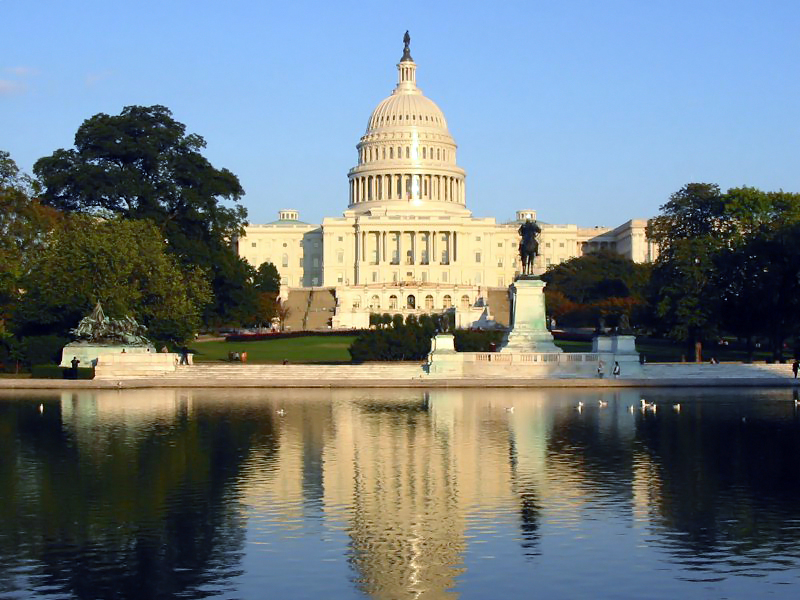
What makes the U.S. Capitol "symbolically important"? Presented with a variety of archival documents, your students can answer that question for themselves. Working in small groups, the students will uncover and share the Capitol's story. The primary sources are presented to the students as mysteries, with a challenge to tie together the information in the documents or images through research.


Our program contains an array of history and public history sessions designed to satisfy a variety of tastes. We have constructed thematic threads that will especially appeal to teachers at all levels, and we offer sessions of particular interest to those who live and work in Wisconsin as well as to those who want to understand the historical roots of contemporary issues. We have invited senior historians to offer challenging interpretive papers, and younger scholars and public history practitioners eager to try out new work.


How could the author of the Declaration of the Independence own slaves? How could twenty percent of the population of the new United States, founded on the principles of liberty and equality, live in bondage? What was life like for enslaved people in the early republic? This online exhibition uses Monticello as a lens through which to examine these questions. 


The current president of George Washington University spent most of the day Thursday delivering some very good news to nine high school seniors in Washington: each of them won a full, four-year scholarship.


The Octagon is open for self-guided audio tours Thursdays and Fridays from 1:00 - 4:00 pm. The museum may be closed for private events so please call or email ahead if you are planning to visit. The following audio tours are available and may be downloaded to any mp3 player:

Monday, February 14, 2011

Black History Month Feature: What's In a Name? Profiles of the Trailblazers

Publication Documents the History of DC's Public and Public Charter School Names


The Women of the Dove Foundation has received several grants from the Humanities Council over the last few years to produce a remarkable history of the District's Public and Public Charter School names. Washington, DC has had a substantial African American population since it was founded, and it was one of the first cities to feature publicly funded schools for black students. Because of this unique history, Whats In a Name: Profiles of the Trailblazers, reveals a strikingly deep, multi-layered story.

There are schools all around the country bearing the names of figures such as Woodrow Wilson, Rutherford B. Hayes, the Marquis de Lafayette, and Benjamin Franklin, and their DC counterparts are all featured in Women of the Dove's survey, but Washington's schools have also carried the monikers of Benjamin Banneker, Francis Lewis Cardozo, and Alexander Crummell. Women of the Dove has rightly observed the necessity of preserving not only the name, but the person whose words and deeds earned them that memorial.

Most Washingtonians know that Banneker surveyed the original boundary lines of the Capital City, but Banneker was also an inventor, mathematician, astronomer, and is recognized in What's In a Name? as “one of the first African Americans to gain distinction in science.” Cardozo was the first African American to hold statewide office when he became the Secretary of State for South Carolina during the Reconstruction era. He later became principal of Washington, DC's Colored Preparatory High school, where he introduced curricula that would transform the school into one of the best for African Americans in the country. Crummell was the son of a slave father and a freeborn mother, who became an eminent educator and clergyman. A professor at Howard University, he founded the American Negro Academy, an organization that encouraged African American scholars and writers to publish and disseminate their works.

Alexander Crummell School in Ivy City, Washington, DC
Recovering the human story behind building names is only one layer of the historical narrative explored by Women of the Dove. Using the names as entre, their publication examines the nuances of Washington's segregated school system, and explores the changes it experienced after the 1954 Bolling v. Sharpe Supreme Court decision that held segregation to be unconstitutional in the federally controlled District of Columbia (Brown v. Board of Education was decided on the the same day). What's in a Name provides a brief history of each school, often characterized by its status as a formerly all-black or all-white, and what happened to it after integration.

The entire publication is available online through the DC Digital Museum. Look up your school, you parents' school, your kids' school; you may be surprised at where the name above the door actually comes from. Read the histories of all the schools to begin to piece together the history of Washington, DC's storied public school system. Let us know what you think. Leave a comment about the publication or about your own experience in DC Public Schools past or present.

For more information on the history of segregated schools in Washington, DC, check out Wide Enough for Our Ambitions, an online exhibit curated by Kim Roberts for last year's Washington, DC Big Read.

Wednesday, February 2, 2011

Black History Month Reveals the Gaps in the Historical Narrative

Is History More Complete Since the Days of Dr. Carter G. Woodson?

Carter G. Woodson
February is Black History Month, and the history of its observance is central to Washington, DC with its tradition of African-American scholars and scholarship. In 1926, Carter G. Woodson launched Negro History Week with the Association for the Study of Negro Life and History (now the Association for the Study of African American Life and History). Woodson lived and worked in the District, and had incorporated the ASNLH there 11 years earlier. He believed that mainstream education functioned as propaganda lifting the history and culture of Europeans over that of others. In a letter to Thomas A. Barnes justifying the ASNLH creation of a home study department, Woodson wrote:

“The fact is that the so-called history teaching in our schools and colleges is downright propaganda, an effort to praise one race and to decry the other to justify social repression and exploitation. The world is still in darkness as to the actual progress of mankind. Each corner of the universe has tended to concern itself merely with the exploits of its own particular heroes. Students and teachers of our time, therefore, are the victims of this selfish propaganda.”

Carter G. Woodson House, Washington, DC
Courtesy: Historical Society of Washington, DC
Woodson was the first child of enslaved parents to receive a PhD. from Harvard University, but was barred from teaching at his alma mater because of his race. He spent his post graduate years teaching in public schools before joining the faculty at Howard University. He was familiar with the U.S. education system at all levels when he created Negro History Week, and was determined to return blacks to the American historical narrative. In 1972 the name and scope of the celebration was changed to Black History Month.

During the past two or three decades, many scholars, educators, and journalists have challenged the relevance and validity of the observance, charging it with tokenism, exploitation, and intellectual segregation. The most common critique is that by relegating African-American history to a single month, it gives us license to ignore it for the other eleven. Some have written that Black History Month is used as a mere marketing tool; businesses put out banners, display photographs of Martin Luther King, Jr., and expect that their contributions will be rewarded with improved public sentiment. This collective empathy is central to the final criticism – that Black History Month is an empty obligation that makes us feel good and assuages guilt, but lacks any substance (largely attributable to the effects of commercialization). 

These arguments are likely all valid in some capacity, but their authors' desire to spot broad social trends often renders the actual accomplishments of Black History Month invisible. Negative reviews of Woodson's creation regularly overlook his original intentions, fail to evaluate whether those intentions are actually being achieved, and almost never suggest alternatives. 

Black History Month does not encourage the inclusion of an alternate historical narrative. By setting some time apart each year to study that separate narrative exclusively, it shows us that the accepted version of American history is quite incomplete without it. Highlighting black history for a set period emphasizes its absence elsewhere, but Black History Month does not cause this absence, it cries out for a remedy. 

Since its founding, but especially since the beginning of its nation-wide observation, Black History Month has gradually begun to fill the gaping holes in American history observed by Woodson in the 1920s. Recently, the Humanities Council of Washington, DC has featured some of its materials related explicitly to African-American history on HCTV and the DC Digital Museum catalog, but they are just two or three out of hundreds that could have qualified. Thanks to Washingtonian, Carter G. Woodson, and his insistence that we pay special attention to Black History for a dedicated period out of each year, few HCWDC grantees have been able to produce projects that exclude it; we simply cannot tell a story without including revelations gained from Black History Months past. Granted, DC has a unique history; for many years it has had a majority black population, and was home to free blacks before the Civil War. The fact remains, however, that Woodson and the ASNLH saw the need for improved black history education based primarily on their observations in the nation's capital. 

In 2011, the HCWDC (and likely many other cultural institutions around the country) would be hard-pressed to relegate emphasis of African-American history to a single month, but in the interest of advancing Woodson's cause and contributing to a still woefully incomplete mainstream narrative of American history, beginning tomorrow, we will highlight select items from the DC Digital Museum. Don't be surprised though, if the series outgrows February!