Showing posts with label architectural history. Show all posts

Tuesday, April 3, 2012

Don't Let the History of Your Neighborhood be Lost

Apply for a DC Community Heritage Project Grant

For the past five years, the Humanities Council of Washington, DC (HCWDC) has made over 80 grants to citizens and organizations interested in preserving the heritage of the city’s unique neighborhoods, landmarks, and culture through the DC Community Heritage Project (DCCHP). The DCCHP is a collaborative effort of the Humanities Council of Washington, DC, the DC Historic Preservation Office, and the DC Commission on the Arts and Humanities. This year, HCWDC will maintain its commitment to preserving local history and culture, by investing in neighborhoods that have not yet had their stories told.

In recent years, D.C. has become a renaissance city, through an influx of buildings, monuments, and newly minted Washingtonians. With all this change, struggles in reconciling the old with the new are inevitable. As such, we are encouraging residents, long-time or newly-arrived, to preserve the histories they have come to appreciate.

Communities can have a powerful connection to the local school house, or the neighborhood church because of the powerful memories associated with these structures. A particularly cruel teacher or benevolent pastor are experiences shared by a group of people and talked about for years, that can eventually be raised to the level of local legend. When those memories are tied to a historic structure, the very character and culture of a neighborhood can seem to hinge on that building’s preservation. In 2009, Deanwood Heights Mainstreets produced their first walking tour of Deanwood's churches entitled “Faith and Foundation.” The group has received subsequent grants to document more houses of worship, and has added other historic Deanwood landmarks to the tour.

In 2010, Historic Mt. Pleasant Inc. combed the local archives to produce a survey of their neighborhood's historic storefronts from 1901-1938. The database they compiled includes ownership transfers, businesses operated, and architectural changes. The data reveals a past Mt. Pleasant dizzy with change and population growth, but it is open for interpretation, and available in full on Historic Mt. Pleasant's website.

But it is not just in the bricks and mortar of the cityscape that collective memory resides. In fact, the most powerful, yet ephemeral local histories reside in the minds of those who have lived them. These are the types of histories best preserved through oral history interviews. In 2007, Empower DC organized an oral history project that captured the memories of long time residents of Ivy City. The tapes revealed strong remembrances of the historic Crummell Elementary School, an endangered historic landmark and the focal point of the community. Empower DC has since expanded the oral history project and has produced a draft documentary film.

In 2009, Tendani Mpulubusi and Helping Inner City Kids Succeed produced an extraordinary documentary film on Barry Farm that explored the community's history and examined its present-day challenges. Barry Farm: Past and Present used interviews with scholars, community historians, students, and community leaders to tell a thoughtful and textured story about one of Ward 8's most historic neighborhoods.

The DCCHP seeks to preserve both the physical and the intellectual heritage of Washington’s neighborhoods. Last year, students and educators from John Eaton Elementary School used a grant from the DC Community Heritage Project to fund a study of the school's past. Students used architectural clues, oral history interviews, and archival research to piece together the history of Eaton Elementary and the surrounding portions of the Cleveland Park neighborhood. The project coordinators used the experience to create a lesson plan that they hope will be replicated by other schools in the District and across the country! The student history detectives were invited to present their findings at last year's 38th Annual DC Historical Studies Conference.

The ultimate goal of the project is to provide the skills and financial means for every neighborhood in Washington, DC to make its history known. We welcome new concepts from neighborhoods already reached by the DCCHP, but we need proposals from communities such as Trinidad, Lamond-Riggs, Lincoln Heights, Brightwood, and others that have not received a grant. Any DC resident with a story to tell about their community is encouraged to apply.

We strongly encourage first time applicants to attend one of our grant workshops. To register for a DCCHP Grant Workshop, please visit http://www.wdchumanities.org/grants/deadlines

Monday, March 26, 2012

Today in the Humanities... Architects, Exhibits, and Public History

Scattered Humanities Stories From DC and Around the Country

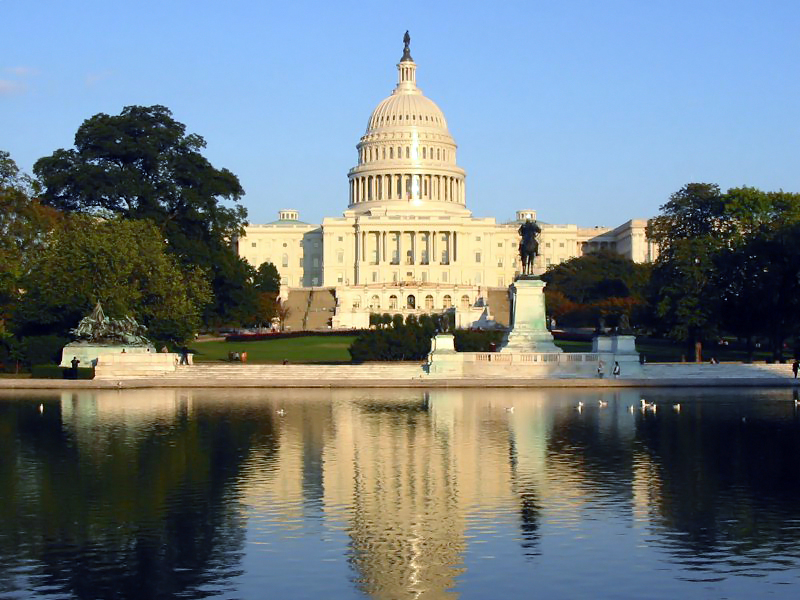
What makes the U.S. Capitol "symbolically important"? Presented with a variety of archival documents, your students can answer that question for themselves. Working in small groups, the students will uncover and share the Capitol's story. The primary sources are presented to the students as mysteries, with a challenge to tie together the information in the documents or images through research.


Our program contains an array of history and public history sessions designed to satisfy a variety of tastes. We have constructed thematic threads that will especially appeal to teachers at all levels, and we offer sessions of particular interest to those who live and work in Wisconsin as well as to those who want to understand the historical roots of contemporary issues. We have invited senior historians to offer challenging interpretive papers, and younger scholars and public history practitioners eager to try out new work.


How could the author of the Declaration of the Independence own slaves? How could twenty percent of the population of the new United States, founded on the principles of liberty and equality, live in bondage? What was life like for enslaved people in the early republic? This online exhibition uses Monticello as a lens through which to examine these questions. 


The current president of George Washington University spent most of the day Thursday delivering some very good news to nine high school seniors in Washington: each of them won a full, four-year scholarship.


The Octagon is open for self-guided audio tours Thursdays and Fridays from 1:00 - 4:00 pm. The museum may be closed for private events so please call or email ahead if you are planning to visit. The following audio tours are available and may be downloaded to any mp3 player:

Monday, January 23, 2012

Who Lived Here?

Houses in DC Live Many Lives. Research the History of Your Home or Another Intriguing Property.

The most important history lessons are deeply personal, and invoke an emotional response. This explains the popularity of documentary film, with its flair for the dramatic, and genealogy with its immediate personal connections. It also explains why some people are so willing to passionately defend a community's architectural look and feel, and the unique intangible identities their neighborhoods develop through tradition and memory. 

On Saturday, February 18, the Humanities Council, in partnership with the DC Public Library, the DC Historic Preservation Office, and the DC Commission on the Arts and Humanities, will host a House History Day during which DC residents will learn how to research the past lives of their homes. House history research is powerful because it provides that personal connection to the past that few other types of historical research can; it allows anyone to forge a strong sense of connection with their neighborhood and their community whether they have called DC home for years, or just moved in last month. 

Next month's workshop will feature hands on instruction from expert archivists and historians; researchers will have time to practice their new skills as well, and are encouraged to bring along as much information about their house's history as they can. 

Sessions include: DC Maps, Historic Building Permit Database, Photo Archives, Microfilm, and DC Digital Museum/Neighborhood Context. The day will consist of two identical workshops in which participants will rotate to each of the sessions. The morning workshop lasts from 10am-12pm and the afternoon workshop from 1pm-3pm.  Lunch will be served between the morning and afternoon workshops. 

To register please visit http://dchousehistory.eventbrite.com

Please register for only one of the two workshops. House History Day is free, but we ask that you only register if you are sure you will be able to attend. The workshops are very popular and space is extremely limited. For more information please email info[at]wdchumanities[dot]org.

Monday, January 16, 2012

Today in the Humanities... MLK Jr. Day of Service; OccupyArchive; and Colonial History in PG

History, Literature, Philosophy, Ethics, and More Wrapped Into a Regular Blog Feature

We want to know how you served on MLK Day 2012. You can share your story here, on our Facebook page, or by sending an email to MLKDay@cns.gov. Your stories will help us highlight the many ways Americans are honoring Dr. King through service, improving lives, and making a difference in our communities.


Currently, the archive includes a growing set of collections of webpage screenshots, movement documents, and digital images. These collections were built with a combination of individual contributions and automated feed importing. Now, with the launch of the OccupyArchive.org website, individuals can contribute and geolocate their stories and files from the movement. Together, these materials will provide an historical record of the 2011 Occupy protests.


Each week, two writing workshops called “Writing for your Health” are offered for people with cancer and other community members in the Nina Hyde Resource Room. One begins at 11:00 am Tuesday during morning clinic and the other in the evening at 6:00 pm. For the morning session, patients are invited to the Resource Room for a brief demonstration of expressive writing while waiting for their appointments.


This year, the Chinatown Community Cultural Center will have a full day of program along with live cultural performances on Sunday, January 29th 2012 from 12pm to 5pm. Visitors will be able to browse the many displays that will teach about the traditions for New Year, participate in a hands-on arts and crafts project, and enjoy the live martial art performances and Chinese musical instrument all of which will be packed in throughout the day and coinciding with the parade.


Each student researches and acts the part of an historic character from the 1860s and traces President Abraham Lincoln's steps as he considered emancipation and its alternatives. These scenes are videotaped and transferred to a DVD for the class to keep. This field trip experience invites students to explore notions of bondage and freedom within the real historic spaces of Decatur House.


The district, located off Livingston Road between Oxon Hill and Fort Washington roads stretching along the Potomac River, considered to be the area first settled by colonists in the Washington, D.C., region, currently is recognized by the county as a historic site and includes Harmony Hall, a Georgian country house dating to the 18th century.


Wednesday, December 21, 2011

History and Community in LeDroit Park

Can Local History Projects Mend Collective Memory?

It's hard to imagine that densely packed Ward 1, with its rows of federal style townhomes and gleaming new luxury condos, was once the target of developers looking to establish subdivided and suburban-style gated communities, but in 1873, LeDroit Park was conceived as just that. Filmmaker Ronald Smokey Stevens recently completed a documentary as part of the DC Community Heritage Project that surveys the history of the neighborhood from its exclusive beginnings, through its illustrious decades as the locus for black culture in Washington (and perhaps the United States), to its current challenges and successes. The film, Preserving LeDroit Park: an historic DC Community, is available in full as part of the Humanities Council's DC Digital Museum, but it can also be purchased at http://www.preservingledroitpark.com.

Stevens' film exemplifies the value of historic preservation and public history. It not only tells the story of LeDroit Park, but it tells the story of a man who's regular rounds through the neighborhood carried him past the Robert and Mary Church Terrell House, and how these encounters with the past inspired and empowered him to find out more.

Mary Church Terrell, Stevens' tells his viewers, began fighting for Civil Rights using civil disobedience tactics long before Rosa Parks, Martin Luther King, Jr., or the Freedom Riders. In 1950 Terrell and a group of activists sought to test the District of Columbia's anti-segregation laws by entering a de facto white-only restaurant. When they were refused service, they filed a lawsuit which, by 1953, led DC courts to rule segregation in eating places unconstitutional. Though many longtime residents of LeDroit Park and Washington, DC likely know of Terrell and her groundbreaking work, her story may be news to families who have recently made the neighborhood their home. By helping to popularize the story of Terrell as well as those of Anna J. Cooper, Walter E. Washington, Reverend Jesse Jackson, Paul Lawrence Dunbar, Duke Ellington, and the other notable residents of LeDroit Park, Stevens can help build a sense of community pride and appreciation of a common past.

Photographer David Corry, interviewed for the film, believes that creating this sense of community will be an ongoing challenge for LeDroit Park, but one that can be overcome. The perceived lack of a sense of community caused by gentrification and demographic shifts can be remedied by public history projects like Stevens' film as personal connections to place and time are developed for newcomers, and rebuilt among long-term residents.

The film is produced well, making use of Stevens' oratory skills, authoritative historical research, illustrative photographs, and stock video footage. It is brief, but informative, and well worth the 17 minutes for anyone interested in Washington, DC history.

More information on the notable residents of LeDroit Park can be found in Kim Roberts' online exhibition Wide Enough for Our Ambition.

Thursday, July 14, 2011

DC Humanities Book Reviews: A Neighborhood Guide to Washington, D.C.’s Hidden History

The First in a Series Covering Recent and Classic Publications on the Humanities in DC

The inaugural review for this series was written by Humanities Council intern, and graduate student in Public History, Bridget Sullivan. Sullivan will enter the second year of in the Public History Master's Degree Program at American University this Fall. She has worked extensively this Summer as a liaison to the Humanities Council's DC Community Heritage Project grantees, and on other projects related to District history and culture. 


Jeanne Fogle provides a comprehensive stop-by-stop guide to the major neighborhoods of Washington, DC in her work A Neighborhood Guide to Washington, D.C.’s Hidden History. Each chapter details the gems of history hidden inside the architectural landscape of the city. Ten to fifteen locations in each neighborhood represent the evolution and history of that area. Together, they provide a picture of the multifaceted history of the nation’s capital. 

Fogle’s book functions as a self-guided tour through some of the oldest neighborhoods in Washington, DC. The variety of sites makes this a good read for both newcomers to the city and Washingtonians alike. For newcomers, it gives a good introduction to the history of the city. Doing any one of these tours will leave the participants with an understanding of the neighborhood’s history and place in the DC community. On the other hand, the breadth of sites discussed is guaranteed to provide some new discoveries for those who have known the city for a number of years. Fogle excels at highlighting the history of buildings that most pass by without a second glance.   

One of the most interesting parts of the book is the fusion of social and architectural history. Fogle blends the two areas together to provide a comprehensive overview each location. She weaves together a variety of locations across the spectrum of historical significance. This variety ensures that there is something in each tour to engage the interest of all participants. 

Overall, Fogle’s guide is perfect as both an introduction to the city or as a resource for continued study. She successfully identifies some of the best historic gems in our nation’s capitol and provides a concise description of their historical significance. One of the many strengths of this book is the ability to create an individualized tour. The organization of the book allows easy planning. Further, the accompanying illustrations are both artistic and a resource for tour takers. A Neighborhood Guide to Washington, DC’s Hidden History is a must for city explorers.

Fogle's work sounds like a great accompanying text for Cultural Tourism DC's extraordinary series of self-guided walking tours, and a must-own introductory text for Washingtonians interested in connecting with their community's past.

Friday, May 27, 2011

U Street Businesses Old and New Honored

Video of the Discussion is Available on HCTV


Last week, on May 18th, the Humanities Council organized its first Washington, DC Great Streets event. The program honors historic businesses along Washington's storied commercial corridors and newcomers adding their own unique contributions. The inaugural event was called Celebrating U Street, and Nizam Ali of Ben's Chili Bowl, Richard Lee of Lee's Flower and Card Shop, and Suman Sorg of Sorg Architects comprised the panel of honorees. The group discussed the changes that have taken place along the U Street corridor in recent years, and reflected on old memories. The discussion was moderated by author Blair E. Ruble, whose recent book, Washington's U Street: a Biography, explores the impact of change and population movement with an approachable, biographical style.


Dr. Ruble confessed that his impetus for writing the book came from grating discussions with people from outside the Washington area who persistently referred to the capital as “not a real city.” Ruble's historical research and interviews with longtime residents clearly disprove this myth, and his work is replicable for most of Washington's neighborhoods, many of which rival the greater U Street area in the depth and richness of their collective memory and culture. 

Both Lee and Ali recalled a U Street that was very much a village in a small southern town. The families who owned businesses in the area were often interconnected, and they interacted with the public on a very personal level. The Industrial Bank, like Ben's and Lee's has been a fixture in the community for many years. Nizam's mother, a teller at the bank, met her husband in the area before they founded their now-iconic restaurant, and Richard Lee fondly recalled Ms. Ali allowing him to come to the front of the line as a small boy making deposits for his parents' shop. While the area has seen much change, both good and bad, Lee believes that the new residents' interest in attending community events has kept some of the close-knit character of the neighborhood intact. Sorg believes that the area would benefit from urban improvements that would encourage more foot traffic and more individual interactions between neighbors. Her firm is also responsible for many of the architectural preservation projects in the area.

The discussion and presentation of awards can be viewed on HCTV, the Humanities Council's Youtube Channel. The well-preserved culture of DC's neighborhoods, coupled with its residents long-term collective memory seem to suggest that the Humanities Council will have no trouble continuing the Washington, DC Great Streets program along other major commercial corridors across the city. Does your neighborhood have an eclectic mix of businesses, both new and old, along its great streets? Mt. Pleasant, MLK, Georgia Ave, M Street, 12th Street NE, Minnesota Ave. Let us know where we should hold the next discussion!

Wednesday, May 11, 2011

Freedom Riders On WETA and HCTV

New Documentary Airs Monday Night at 9PM


In 1961, a group of African American activists, with supporters of all races and ethnicities, boarded buses at the New York Avenue Greyhound station bound for the Deep South. The supreme court had recently declared discriminatory laws effecting interstate buses and depots unconstitutional, and this courageous group was determined to test the ruling. The Freedom Riders were taunted, beaten, and jailed; their buses disabled and set ablaze, but the determined voyagers succeeded in sending the message that the rule of law alone would not be enough to subdue an entrenched Jim Crow.

This Monday at 9pm, PBS will air an all new documentary film on the Freedom Riders. The WETA website features a history of the movement, excerpts from a Smithsonian panel discussion, updates from a group of students recreating the original bus route, and an interview with the film's creator.

PBS Freedom Rides Trailer

Local filmmaker Steven Nero has been working on a similar, but more DC-focused, documentary with funding from the Humanities Council for the last few years. The most recent edition debuted at the DC Community Heritage Project showcase last December, and has garnered significant attention on the Council's Youtube channel. Check out the film if you haven't already, and be sure to tune in on Monday for producer Stanley Nelson's take on this historic Civil Rights protest.

Nero's Greyhound Building and Freedom Riders Documentary

The DC Community Heritage Project is a partnership of the Humanities Council, the DC Office of Historic Preservation and the DC Commission on the Arts and Humanities.

Tuesday, April 19, 2011

Remembering the Black Fashion Museum

Collection Will Reemerge as Part of the Smithsonian National Museum of African American History and Culture


The Black Fashion Museum was founded in 1979 by Lois Alexander Lane in a Harlem brownstone. Lane was a dedicated fundraiser and curator, and managed to expand her wealth of culturally and socially significant artifacts for nearly 30 years. In 1994, the museum moved to Washington, DC where Lane eventually established it in a one hundred year old row house at 2007 Vermont Ave, NW - just around the corner from the Humanities Council. After Lane's death, her daughter Joyce Bailey sought to continue her mother's efforts to expand the organization's collection and reach, but the cache of dresses, coats, hats, and other garments designed and sewn by slaves, famed Hollywood designers, Civil Rights leaders, and First Ladies' seamstresses, had begun to outgrow the Vermont Avenue facility. In 2007 Bailey donated the important collection of Americana to the new Smithsonian National Museum of African American History and Culture.

This episode of Humanities Salon honors Anne Lowe, a noted African American clothing designer who created Jacqueline Bouvier Kennedy's iconic wedding dress in 1953. It was filmed at the Black Fashion Museum in 2002, and includes several notable panelists including Lowe's great granddaughter and Washington Post fashion editor Robin Ghivan. Ghivan wrote an outstanding article on the Black Fashion Museum and its important, yet overlooked, collection in 2007, as it was moved to the secure and climate-controlled facilities of the Smithsonian.


The National Museum of African American History and culture is scheduled to open in 2015.

Wednesday, January 12, 2011

DC's 2011 Most Endangered Buildings List

DC Preservation League Seeks Nominations


The 3rd Church of Christ Scientist building at
16th and Eye St, NW made the list in 2008
The DC Preservation League is accepting nominations for its 2011 most endangered list. Since 1996, the Preservation League has annually compiled a list of culturally or architecturally significant buildings that are threatened by demolition, irresponsible redevelopment, or neglect. Last year's nominees included: Metropolitan AME Church at 1518 M. Street, NW; a collection of historic homes comprising parts of Historic Anacostia; and DC's historic fire houses. The Preservation League testifies before the DC Historic Preservation Review Board to encourage protection of the structures it identifies as significant.

If you are interested in preserving a piece of the built environment, nominating a structure for inclusion on the annual Most Endangered list is a good start. For more information visit the DC Preservation League website.