Showing posts with label book reviews. Show all posts

Tuesday, November 29, 2011

DC Humanities Book Reviews: "Free Agents: A History of Washington, DC Graffiti"

Another Review From Humanities Council Intern, Bridget Sullivan

Gastman, Roger. Free Agents: A History of Washington, D.C. Graffiti. (Bethesda: R. Rock Enterprises, Inc.,2001)
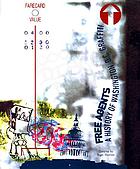
Free Agents: A History of Washington, D.C. Graffiti contains the stories of some of D.C.’s most notorious graffiti artists in their own words. Roger Gastman uses his knowledge of and connection to the graffiti world to speak with some of the big names in the history of  D.C. graffiti. The book covers the personal stories of these artists, as well as their creation of a unique graffiti culture in the District. It also includes several pages of photographs of iconic pieces of DC graffiti. The combination of stories and photographs gives the reader a strong sense of the way that this culture developed over the course of the past few decades.
This work showcases the hidden side of DC graffiti. Although Gastman seeks to highlight that graffiti is not merely an act of rebellion or vandalism, he does not shy away from addressing the less glamorous aspects of this scene. Drug use and police conflicts are addressed head-on in the several stories, but they are discussed from a perspective outside the mainstream.  

Gastman’s portrayal of graffiti culture captures its ephemeral nature. He shows that the majority of pieces last for a limited time, and that most artists eventually move on from graffiti. Gastman, again, takes a different perspective, stating that this turnover allows newer artists to make their mark on the city. He also emphasizes the role live music shows played as a forum for graffiti artists.

Overall, Gastman makes the case that the graffiti scene of Washington, DC is a lot more than initially meets the eye. He presents the stories of its history in a way that immerses the reader in the underground culture of graffiti art, both good and bad. Further, he focuses the snapshot images within the wider narrative of both the graffiti scene and the life stories of those involved. 

Monday, September 12, 2011

DC Humanities Book Reviews: Growing Up in Washington, D.C.: An Oral History

After an Admittedly Long Hiatus... The Book Review Series Continues

The following is Bridget Sullivan's second book review for Human Ties. Sullivan will enter the second year of in the Public History Master's Degree Program at American University this Fall. She has worked extensively this Summer as a liaison to the Humanities Council's DC Community Heritage Project grantees, and on other projects related to District history and culture.

Connors, Jill, ed. Growing Up in Washington, D.C.: An Oral History. The Historical Society of Washington, D.C. (Charleston: Arcadia, 2001) 158 pgs.

This work is the end product of an oral history project completed by the Historical Society of Washington, D.C. It is a compilation of quotes taken from the wide spectrum of oral histories collected. The body of interviews is comprised of residents of all DC neighborhoods, and a wide range of ages. This variety creates a picture of a vibrant community, and reflects the changes the DC community has experienced over the last few decades.

The Historical Society grouped quotes around seven major facets of everyday life including, holidays, working in the city, school, and the creation of communities. These categories allow the reader to truly explore many of the unique aspects and historical traditions of the neighborhoods of Washington, D.C. In addition to the breadth of knowledge available in this work, the Historical Society has presented it in an easily readable and simple format.

The strength of this project comes from the gems of knowledge and history within the interviews conducted, which allow these resources to speak for themselves. There is no attempt to force a traditional narrative. Instead, quotations from the oral histories are organized and presented in a way that gives the reader a strong sense of the environment in DC during any given period or event. An introduction to the oral history participants is another warm touch of this work.

The book is designed not only to give a sense of the DC community, but also to welcome the reader into that community. It presents an important, and often overlooked, side of the history of Washington, D.C. Washington as a community as well as Washington as our nation’s capital. Overall, I would recommend this book to anyone interested in the local history of Washington, D.C.

Thursday, July 14, 2011

DC Humanities Book Reviews: A Neighborhood Guide to Washington, D.C.’s Hidden History

The First in a Series Covering Recent and Classic Publications on the Humanities in DC

The inaugural review for this series was written by Humanities Council intern, and graduate student in Public History, Bridget Sullivan. Sullivan will enter the second year of in the Public History Master's Degree Program at American University this Fall. She has worked extensively this Summer as a liaison to the Humanities Council's DC Community Heritage Project grantees, and on other projects related to District history and culture. 


Jeanne Fogle provides a comprehensive stop-by-stop guide to the major neighborhoods of Washington, DC in her work A Neighborhood Guide to Washington, D.C.’s Hidden History. Each chapter details the gems of history hidden inside the architectural landscape of the city. Ten to fifteen locations in each neighborhood represent the evolution and history of that area. Together, they provide a picture of the multifaceted history of the nation’s capital. 

Fogle’s book functions as a self-guided tour through some of the oldest neighborhoods in Washington, DC. The variety of sites makes this a good read for both newcomers to the city and Washingtonians alike. For newcomers, it gives a good introduction to the history of the city. Doing any one of these tours will leave the participants with an understanding of the neighborhood’s history and place in the DC community. On the other hand, the breadth of sites discussed is guaranteed to provide some new discoveries for those who have known the city for a number of years. Fogle excels at highlighting the history of buildings that most pass by without a second glance.   

One of the most interesting parts of the book is the fusion of social and architectural history. Fogle blends the two areas together to provide a comprehensive overview each location. She weaves together a variety of locations across the spectrum of historical significance. This variety ensures that there is something in each tour to engage the interest of all participants. 

Overall, Fogle’s guide is perfect as both an introduction to the city or as a resource for continued study. She successfully identifies some of the best historic gems in our nation’s capitol and provides a concise description of their historical significance. One of the many strengths of this book is the ability to create an individualized tour. The organization of the book allows easy planning. Further, the accompanying illustrations are both artistic and a resource for tour takers. A Neighborhood Guide to Washington, DC’s Hidden History is a must for city explorers.

Fogle's work sounds like a great accompanying text for Cultural Tourism DC's extraordinary series of self-guided walking tours, and a must-own introductory text for Washingtonians interested in connecting with their community's past.