Showing posts with label historical society of washington dc. Show all posts

Monday, February 27, 2012

From the DC Digital Museum Archives... The City Museum Talks Archaeology

What Secrets do the Streets Beneath Downtown Hold?

In 2003, the staff of the short-lived Washington, DC City Museum, won a grant from the Humanities Council to produce a short film on the archaeological history of the 7th Street Downtown neighborhood the new institution would occupy when it opened at the Carnegie Library on Mt. Vernon Square. The film, narrated by Okolo Thomas-Toure, introduced its audience to the ordinary people who lived in downtown Washington from the city's founding to the early 20th century when the area became known as a red light and nightlife destination.


A series of vignettes introduce the neighborhood's immigration history, medical history, architectural history, and entertainment history. Check out the film and tell us what's missing! How would you alter or add to the historical narrative of bustling Downtown Washington?

Thursday, January 5, 2012

Today in the Humanities... Igloos; Internets; and Cultural Tourism's Top 12 of 2011

Catch the Latest Humanities Stories and Check Out Some You Might Have Missed

The Kiplingers, a prominent Washington business dynasty, started collecting rare photographs and prints of Washington in the 1920s. They assembled work dating back to 1791, added the work of Civil War photographers Mathew Brady and Alexander Gardner, and then gathered examples of Washington history through the mid-20th century.


The prestigious Carnegie Corporation of New York and New York Times "I Love My Librarian" award goes to D.C. public librarian Venetia V. Demson.  Demson is one of 10 librarians in the country and the first in this region to receive this annual award.


Most of us leave breadcrumbs behind us online. Say you’re shopping online and a pair of leather boots catches your eye. You zoom in, reading reviews. Finally, you refocus and click a link to a Washington Post article. There, in an ad box to the right, are those boots. It’s like they are meant for you, calling out to you.


One of the few things that we can be sure about in this period of accelerating change is that the monumental advances in communications technology spawned by the invention of the computer and the chip have epochal implications for human learning. A revolution has commenced where science and technology are melding with the humanities.
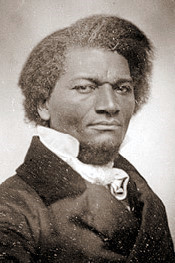

Students from the Arts & Technology Academy, a public charter school in Washington, recite portions of Frederick Douglass’s 19th-century speeches in annual contest.


Although there may be extremely cold temperatures outside an igloo, amazingly the inside can be as warm as sixty degrees due to the natural insulation properties of the snow. But igloos aren’t the only type of snow buildings. From hotels to castles to entire villages, people are building all sorts of snow structures around the world. 


The Top 12 of 2011 DC Insiders list gives you a sample of some of the many different activities there are in the city.


Monday, September 12, 2011

DC Humanities Book Reviews: Growing Up in Washington, D.C.: An Oral History

After an Admittedly Long Hiatus... The Book Review Series Continues

The following is Bridget Sullivan's second book review for Human Ties. Sullivan will enter the second year of in the Public History Master's Degree Program at American University this Fall. She has worked extensively this Summer as a liaison to the Humanities Council's DC Community Heritage Project grantees, and on other projects related to District history and culture.

Connors, Jill, ed. Growing Up in Washington, D.C.: An Oral History. The Historical Society of Washington, D.C. (Charleston: Arcadia, 2001) 158 pgs.

This work is the end product of an oral history project completed by the Historical Society of Washington, D.C. It is a compilation of quotes taken from the wide spectrum of oral histories collected. The body of interviews is comprised of residents of all DC neighborhoods, and a wide range of ages. This variety creates a picture of a vibrant community, and reflects the changes the DC community has experienced over the last few decades.

The Historical Society grouped quotes around seven major facets of everyday life including, holidays, working in the city, school, and the creation of communities. These categories allow the reader to truly explore many of the unique aspects and historical traditions of the neighborhoods of Washington, D.C. In addition to the breadth of knowledge available in this work, the Historical Society has presented it in an easily readable and simple format.

The strength of this project comes from the gems of knowledge and history within the interviews conducted, which allow these resources to speak for themselves. There is no attempt to force a traditional narrative. Instead, quotations from the oral histories are organized and presented in a way that gives the reader a strong sense of the environment in DC during any given period or event. An introduction to the oral history participants is another warm touch of this work.

The book is designed not only to give a sense of the DC community, but also to welcome the reader into that community. It presents an important, and often overlooked, side of the history of Washington, D.C. Washington as a community as well as Washington as our nation’s capital. Overall, I would recommend this book to anyone interested in the local history of Washington, D.C.