Wednesday, December 10, 2014

Neighborhood Knowledge is coming to you!


Sure, you know your neighborhood. But what about others? Humanities DC's commitment to the residents and learning takes on an exciting new form next Tuesday, December 16.

With the help of Big Bear Cafe, we'll focus the spotlight on Bloomingdale, first stop in our mad concert tour of DC neighborhoods.

But this isn't your ordinary talking head format. It is the residents who breathe life into a neighborhood, and that's where you all come in. Our program will explore Bloomingdale through the voices of its community.

Hear our panelists discuss the neighborhood's past and present. More importantly, join the conversation!

Share your photos, stories, videos, art, and anything else that addresses the evolution of Bloomingdale's urban space and community.  Bring them with you, or upload in the comments below.
We can't wait to hear from you!

Monday, December 1, 2014

Neighborhood Knowledge: Bloomingdale

Good Hope, Sawmpoodle, Sursum Corda... Washington DC counts 112 neighborhoods. How many do you know? Find out with a new slot in the Humanitini program: Neighborhood Knowledge. In this recurring series, we criss-cross the city east to west and north to south to explore the diverse geographical and social tapestry of its communities. 

On Tuesday 12/16 at Big Bear Café (6:30-8:30pm), we'll focus on Bloomingdale, past and present. The neighborhood's growing development in the last few years has brought in its wake a new economic reality along with, inevitably, demographic change. Rather than tracing its evolution through charts and percentages, we'll focus on community voices. 


We want to hear from you -- Bloomingdale residents and enthusiasts old and new, former and current. We're interested in the architecture, stories, traditions, and most of all, the multiple facets of lived experience that make up the neighborhood's history. From childhood to churches, parks to parades, street art to community relations, we welcome an array of approaches to the theme of urban transformation. 


Please contribute to the conversation by sharing your photos, posters, stories, little-known facts and more! Together, they'll set the stage for discussion and become part of Bloomingdale's collective neighborhood knowledge.


HOW: For images, you may post digital, scanned photos to this blog by uploading them in the comments section. 

OR you can bring hard copies to Stu Davenport at Big Bear Café  which he'll exhibit on the walls for all to enjoy. 
We look forward to hearing from you!

DETAILS

WHEN: Tuesday, December 16; 6:30-8:30pm.
WHERE: Big Bear Cafe, 1700 First Street NW
WHO: Our panel includes
Natalie HopkinsonPh.D, author of Go-Go Live Ph.D, author of Go-Go Live (www.nataliehopkinson.com) 
Saaret Yoseph, multimedia storyteller; director/producer of The Red Line D.C. Project (www.redlinedc.wordpress.com)
Scott Roberts, community activist and blogger of Bloomingdale
Autumn Saxon-Ross,Ph.D., program director for place-based initiatives for the National Collaborative on Health Equity. 
WHAT: Free! Register here: http://www.eventbrite.com/e/humanitini-neighborhood-knowledge-bloomingdale-tickets-14879367589


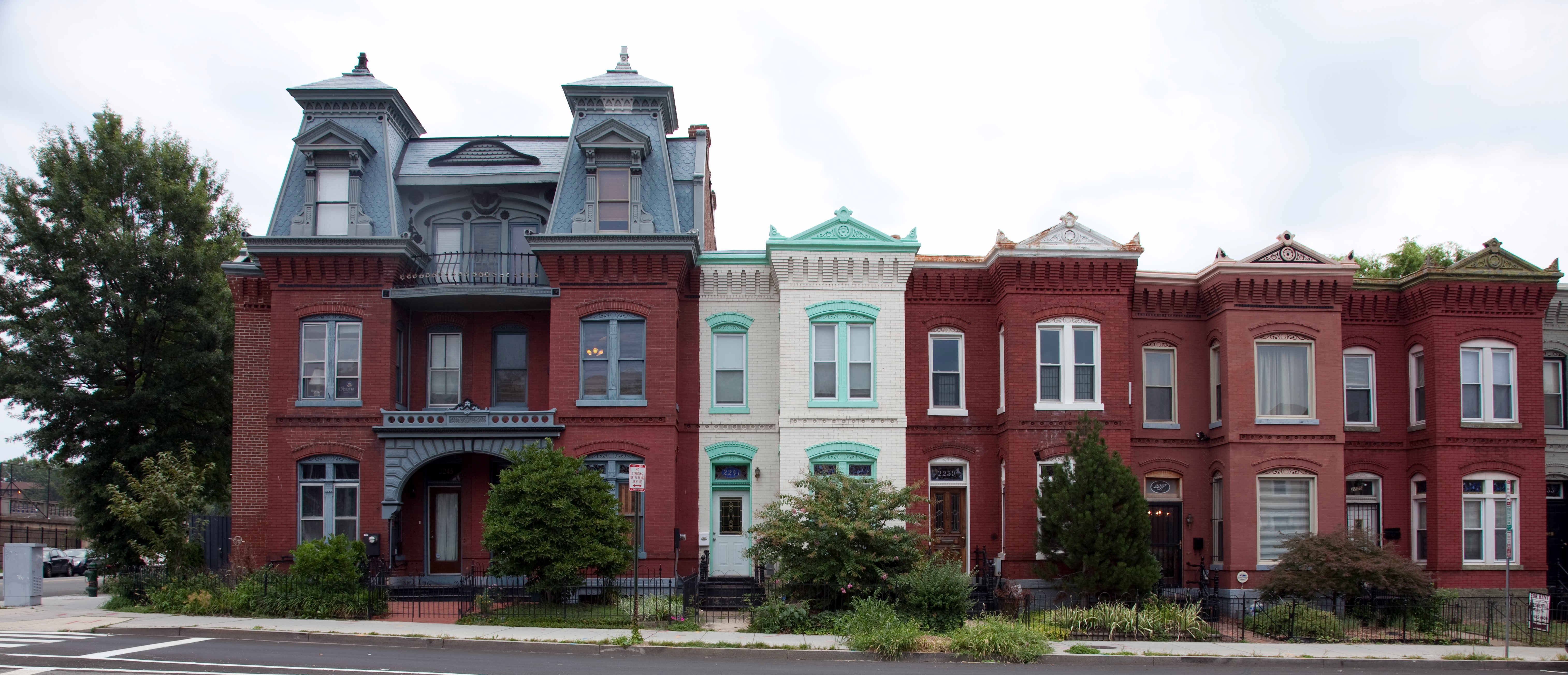
Bloomingdale and Ledroit Park in 1901.

Thursday, September 25, 2014

World House: Fostering a Global Citizen

by Claire Salinas, History Scholar and Humanities Council Programs Volunteer


In 1967, Martin Luther King challenged Americans to see themselves as dwellers in a “world house” of international neighbors, “a world-wide fellowship that lifts neighborly concern beyond one’s tribe, race, and class.” First evoked in his 1964 acceptance speech for the Nobel Peace Prize, the vision of a “World House” called for a more peaceful society in which the pursuit of justice transcended the boundaries of local belonging. To end “the triple evils of racism, poverty, and militarism” on a global scale both demanded and forged, inexorably, a global citizenry.

Five decades on, it is a commonplace to describe our 21st century world as inter-connected, shaped by the global currents of trade, communications, militarism, and political protest. What, then, are the implications of global citizenship in 2014? Are we all global citizens by virtue of living in this era, or does the notion imply a more intentional outlook and fundamental shared ethical values, such as those Dr. King ascribed to it?

We think these questions resonate especially deeply in the international, globally-connected city that is DC, with its well-travelled inhabitants. And we want to hear from you! What does being a global citizen mean to you? In what ways do you consider yourself to be a global citizen? To start thinking about these issues, have a look at the short reading and questions below, and leave us your comments, questions, and reactions. Then join us for the discussion with panelists Rachel Weiner, Elizabeth Ogunwo, both former Peace Corps volunteers, and GWU Anthropology professor Robert Shepherd. Let’s start a global dialogue!

When: October 16, 6:30-8:30pm
Where: The Coupe (3415 11th St NW)

1.      What are some of the attributes of the global citizen? What role does travel play in shaping global citizens? What are the benefits of being a well-travelled person, and how does it increase our understanding of, and concern for, humanity?
2.      Do global citizens have a responsibility to uphold common humanity and dignity on a global scale? Do the world’s wealthy citizens (Americans and others) have an ethical duty to end extreme inequities and injustices, such as poverty and racism?
3.     What must we teach students and others to make them truly and effectively globally connected, and able to interact easily and skillfully anywhere and with anyone?

4.     What does studying or promoting the humanities bring to being a world citizen?


Wednesday, August 6, 2014

Urban Farming in DC: A modern phenomenon or an indelible part of the city's past?

An Interview with David Quick of the Neighborhood Farm Initiative

David Quick; Image Courtesy of WAMU, Jonathan Wilson
 Last year, the Neighborhood Farm Initiative conducted an extensive oral history project, interviewing over 35 long time community gardeners throughout Washington, DC. The interviews were funded by the Humanities Council of Washington, DC as part of the DC Community Heritage Project, a partnership between the Council and the DC Historic Preservation Office. David Quick and his team rapidly built a collection of narratives that manage to broadly survey DC's recent history despite a determined focus on a very particular topic - urban farming. Last week, Quick swapped seats at the interview table to give us some insight into his team's goals, processes, and hopes for the future of their project.

What was the overall goal of the DC Gardener’s Oral History Project?
Our goal was to gather personal historical narratives from long-time DC gardeners and uncover the way that gardening and food-growing have been a part of DC urban life for many many years. Our primary mission at Neighborhood Farm Initiative is to educate people about how they can grow their own food, but we also know that gardens are spaces where people connect with each other and share stories. We wanted to document those kinds of connections and stories.

How did you decide who to interview?
Our only criteria were that interviewees be long-time DC residents and long-time food growers. Mostly, this meant that we were interviewing older DC residents, but we also talked with some people in their 30's and 40's who've lived here and gardened here their whole lives. As long as we felt that someone had a lot to say about growing food in this city, we wanted to talk to them.

What did you learn about community gardening and urban farming in DC?
Again, it's certainly evidence that DC residents have been doing this activity for a long time, well before urban agriculture and local food became as popular as they are right now. These interviews also highlight how often urban food gardeners (or their parents) often tend to have moved here from another country or region of the United States. We had quite a few stories of people who had grown up on farms and found ways to continue to grow food when they arrived in the city, and the interviews show the many techniques used by gardeners and farmers from around the world.  Likewise, they are people who feel passionately about food, and that passion comes out in the garden.

What was your favorite story?
Bennie Harris
I will cheat and name two. First, we interviewed a few people from our home Mamie D. Lee
community garden. One was with a long-time leader at the garden Bennie Harris who was also an advisor on our project. Mamie D. Lee has changed quite a bit recently with many more young professionals of a wide variety of backgrounds gardening plots, but for many years, there was a smaller community of African-American gardeners who were the primary stakeholders at the garden and who kept the garden cultivated so that the National Park Service would not perceive it as unused. There's a lovely moment in the interview when Josh, the interviewer and a MDL gardener, thanks Bennie for maintaining the garden so that newer gardeners have a place to grow their own food now. Bennie also talks about the way that the garden community shared their produce with folks who walked by and asked for food. Also, the changes in the make-up at MDL reflect many of the ways that DC is changing, so the interview is a valuable window into how gentrification is affecting many kinds of spaces.
The other interview is with a woman named Fannie Hamilton who grew up in Barry Farm but has lived with her family in Takoma, DC for many years. Throughout her life, Ms. Hamilton has gone out of her way to teach and educate others about how they can grow their own food and herbs and the health benefits that come from that, so hers is a powerful story about how gardening creates community and improves people’s lives. Our interviewer Mia has a similar passion for teaching others about growing herbs, and plants, and foods, so the interview is a wonderful record of the two of them sharing that love.

What did you learn about the oral history process?
This was my first time coordinating an oral history project like this, so I learned all kinds of things. One thing that I understand much better is the importance of training and preparation. The two fabulous interviewers that we hired were new to the world of oral histories, so I tried to do as much early preparation to convey the value of oral history and practice the interview process. Likewise, it helped to check in with the interview team as the project went forward so that we could continue to learn from each other and become more confident as interviewers.
 I was also reminded of how wonderfully open people are to being interviewed and sharing details about their lives. I expected us to have to work much harder than we did to find willing interviewees, but again and again the simple offer to sit down and listen was enough to convince people to be interviewed.

How do you hope people use the collection?
I definitely hope that there is real research value in this collection, not just into the history and culture of food, but also into different aspects of community, neighborhood, race, immigration and class in an urban environment like DC.
I'm also hopeful that these stories will be an inspiration to people who are interested in growing their own food in an urban place. The people that we interviewed have a deep reverence for this activity, and I'm so glad that it comes across in their stories.

Listen to the full collection in the DC Digital Museum!


Thursday, May 1, 2014

Event Recap: Humanitini- Conversations on Great Streets: Mount Pleasant!


The Humanities Council hosted HUMANITINI ™, the smart happy hour, on Thursday, April 24 at Don Juan Restaurant. This edition of Humanitini, “Conversations on Great Streets: Celebrating Historic Mount Pleasant Street” was moderated by Washington City Paper Journalist Aaron Weiner. The conversation offered attendees a perspective on the history, culture, and heritage of the vibrant Mt. Pleasant street corridor and community.

Panelists included Alberto Ferrufino owner of Don Juan Restaurant, Pedro Aviles, founder of Aviles Associates, LLC and Peter Stebbins, a 25 year resident of Mt. Pleasant.

Approximately 60 attendees filled Don Pablo Restaurant and they both learned and shared their perspectives on the changing Mount Pleasant demographics, business climate and opportunities for growth.

Conversations on Great Streets is a series created by the Humanities Council to engage residents around the history and great treasures of some of D.C.’s well-known corridors.


Take a look at photos from Humanitini, and stay connected with the Humanities Council for upcoming events.


Friday, March 7, 2014

Recapping the Humanitini

Two Panel Discussions Demonstrate the Continued Importance of the Humanities.

By Maria Galiano

Last week, while the streets of D.C. experienced a small preview of the weekend's winter storm, happy hour met the humanities at the council’s first Humanitini event of 2014, “Who Needs the Humanities Anyway?” The event opened with a screening of Lance Kramer's The Scholar and the Sailor, a short film that tells the story of how a professor’s book served as an inspiration for Greg White, a former prison inmate. Kramer was then joined by White and Dr. W. Jefferey Bolster for the first panel discussion of the evening. 

After getting his hands on Dr. W Jefferey Bolster's book, Black Jacks: African American Seamen in the Age of Sail, White decided to write a letter to Bolster to share his life experiences including his service in the United States Navy. In his first letter, White mentioned how reading the pages of Black Jacks reminded him of how much he missed being at sea, and how the stories of African American sailors carving out their own sense of freedom encouraged him to incorporate seafaring into his post-incarceration life. One of the most inspiring moments of Thursday's Humanitini was Bolster’s statement that the humanities allowed him and White to connect, and that the connection was mutually beneficial.  Another was White’s reminder that no cloud should ever be too dark to keep you from sailing your ship of life.  

Following this poignant of example of the power of the humanities disciplines, the focus of the event shifted to examine the state of the humanities more broadly. The second panel brought on Lacey Dunham of the effervescent youth creative writing non-profit 826DC, Esther Mackintosh of the Federation of State Humanities Councils, Tia Brown McNair of the Association of American Colleges and Universities, and Nafisa Isa of Busboys and Poets

This enlightening panel discussion, made it clear that the humanities have been, and continue to be, an important tool in our present-day globalized world. The humanities disciplines link us and allow us to communicate. Panelists also addressed the subject of the employment rate for liberal arts/humanities majors, noting that many employers seek the research and analytical expertise gained through these areas of study. Though it is commonly contended that the STEM (science, technology, engineering, mathematics) disciplines are the only sure path to employment opportunities after graduation, the panelists reassured the audience that students who are learned in the humanities acquire essential skills that are required both in and outside the workplace. Kramer, returning for the second panel noted that while the cutting edge in the STEM disciplines changes as technologies develop, humans will likely interact with each other in consistent ways for the foreseeable future. 

One most of the most time-tested debates against the humanities disciplines is that their study is reserved for the children of the wealthy; those who have less need to learn a practical skill. Isa countered this argument by calling attention to the humanities disciplines' unique ability to give a voice to the underrepresented. The ability to understand the, often invisible, human-made systems that guide our lives can prevent those systems from become intrusive, unfair, and oppressive. 

The panel concluded with the reminder that our focus should not be on the metrics of employment rates, but rather on the long-term benefits that the humanities provides us.

So who needs the humanities anyway? Well, as our Humanitini event demonstrated, we all do! 

Tuesday, February 11, 2014

Don't U Forget As U Walk On By!

A glimpse into past and present day U Street

By Maria Galiano

If you are a resident of the nation's capital, then you probably already love the one and only, famous U Street. From its iconic Ben's Chili Bowl diner to its venerable Victorian era architecture, U Street screams D.C. culture!

A row of historic homes just off the U Street Corridor.
Although modern U Street may be known for its exquisite style, U Street's memory bank is rich with history that is worth preserving and celebrating! The row houses tell the story of the post-civil war era when housing was in great demand in the city. At first glance, these houses might look identical to each other, but if you take the time to appreciate each block, you'll realize that each house has its own unique features that contribute to this city's collective mosaic! And speaking of the community, it is impossible to overestimate the importance of Civil Rights Era in U Street's history. Though the neighborhood was long a bastion of African American business, and self determination, following the 1968 assassination of civil rights leader Dr. Martin Luther King Jr., riots exploded around the U Street corridor. Businesses were hurt and the community was affected, but there is no doubt that the U Street managed to get back on its feet!

And who can forget the great culture of U Street?! The performing arts are an integral part of this community's culture. The Howard Theatre built its historical reputation in the early part of the twentieth century. At a time when African Americans were excluded from white cultural opportunities in other parts of the city, this location allowed many African Americans to come and establish a place that reflected a sense of community. Many famous artists such as James Brown and The Temptations showcased their talents on this theater's stage! Special audience members, such as President Franklin D. Roosevelt, attended performances at Howard Theatre Oral testimonies from community members who remember growing up and having Howard Theater become a special and central place in their everyday lives can be found in DCDM's item Memories of the Howard Theatre. The Lincoln Theatre is also remembered as a welcoming place for its community members. In fact, Washington's D.C.'s  very own Duke Ellington began his career as an rising star at the Lincoln Theatre. Located next to Ben's Chili Bowl, the Lincoln Theatre echoes a time when french horns and trumpets played to the rhythm of Jazz!

Now we fast forward to present day U Street... And CVS.Yes, those red-logo, brown buildings that have been built in what seems to be every corner of this town make up a major part D.C.'s businesses. But U Street is also home to other business sites, such as Busboys and Poets, Lee's Flower and Card Shop, and Sorg Architects. Busboys and Poets provides a pleasant and amicable atmosphere to its customers! After enjoying a delicious meal, customers are able enjoy the artwork display at the restaurant. It is a delicious way to satisfy a lunch craving and a fun way to feed the creative mind! If you ever forget mom's birthday or the fact that it is Valentine's Day, U Street's Lee's Flower and Card Shop can come in handy with its same day delivery service!With its heartwarming cards and great customer service, it is no surprise that Lee's Flower and Card Shop was and still is a family operating business! And a look into Anacostia High School, reveals the inspired restoration that Sorg Architects has completed over the last few years. As mentioned in Celebrating U Street: A Washington DC Great Street, (footage from the program can be found in the DCDM), these businesses contribute to the flavor and energy of U Street!

 So as you walk on by U Street, don't  U forget about its historical past, and don't forget to appreciate its alluring present! 

Tuesday, January 28, 2014

A Perspective on the Humanities

Collections Management Intern, Maria Galiano Offers Her Perspective on the Importance of Preserving Historical Narratives

By Maria Galiano

A current philosophical debate in the history department raises the question of whether history should solely be taught through facts or through narratives. I say why not both? In stating facts, one must tell a story as a historical background for those facts, and in telling a story, one must state the facts in order to create the legitimacy of the historical narrative.

In order to keep history alive, we preserve it. Just like monuments and museums make tribute to certain people and events, preservation serves as an artifact that truly tells a story.

Many forget that history plays a big role in allowing us to tie the present with the past. The In the Shadow of the Capitol series documents a symposium that celebrates the memories of several intellectual minds of D.C., such as Sterling A. Brown, Owen Dodson, Gloria Oden, Harold Chinn, and Anne Cook Reid. These speakers discuss various topics including segregation in the arts and in education.
From documentary films to oral history collections, the DC Digital Museum celebrates the cultural history of the Washington, D.C. community.

Members of the community can learn a great deal about their society through local history. Being a part of history is impressive, but preserving and celebrating it is imperative.


White Footsteps

The soft, cold white blankets of snow are covering Washington again
As I walk through Logan Circle, I see the footsteps that have been left before me
Some are big. Some are small. Some have been wiped away
And I reminded that I am not alone
There is a community
It is what brings us all to a state of unity
I pause for a second and ask myself,
Why don’t I know more about this beautiful place?
Memorials and buildings are a constant reminder,
A reminder of the history that took place before and after

It’s one of the coldest winters yet,
And I realize that I am in debt…
I owe some time to the story of past and present Washingtonians
I owe some time to this town’s kaleidoscopical history
I owe some time to D.C.’s memory

And so I thank these white footsteps
For reminding me that I cannot be whole
Without including the story of my community,
Without learning much, much more

Wednesday, January 22, 2014

Who Needs the Humanities Anyway?

Join us at The Coupe for an exciting Humantini conversation on the future of the Humanities

When
6:30-8pm
February 13, 2014

Where
The Coupe
3415 11th Street, NW
Washington, DC 20010

Register for this FREE Program 

This panel discussion will demystify the recent rhetoric on the plight of the humanities. As a result, we hope the program will shift the tone of the conversation from "decline" and "crisis" to one of celebration. In doing so, we will highlight the impact and accomplishments of the Humanities inside and outside the academy.  

The program will feature a lively discussion that expresses varied perspectives on the Humanities disciplines' local and national impact. The panel will feature a Humanities Council grantee, Nafisa Isa, Project Manager for Marketing and Events at Busboys and Poets and Founder of Kahani a cultural salon series in Washington, DC, as well as Esther Mackintosh, a national advocate for the advancement of the public humanities and President of the Federation of State Humanities Councils. 

Join us to engage in this important conversation that is getting major attention from the halls of the Academy to the chambers of Capitol Hill. You may find out that you are already benefiting from the Humanities!

Tuesday, January 14, 2014

The Dream That Was Heard

"Free at last! Free at Last!..." Fifty one years ago, Dr. Martin Luther King Jr. delivered an empowering speech that echoed from the footsteps of the Lincoln Memorial to around the globe.

By Maria Galiano

The dream of which he spoke seemed to be an unattainable reality for society at the time, but was nevertheless an inspiration to the masses. This upcoming Monday, the country will celebrate Dr. King's life as it observes the Martin Luther King Day holiday.

A special piece that can be found in our DC Digital Museum documents the council's 2008 symposium, "Giving Freedom A World Voice", dedicated to the commemoration of the global legacy of Dr. King. Acquaintances and guest speakers delivered speeches on Dr. King's life. It is almost as if Dr. King's intensity had lingered on to the words of these speakers, as one can see and feel the passion that each speaker is filled with. The 2008 presidential election of President Barack Obama was discussed as being a symbol of the inspiration and influence that Dr. King left behind. Performers of various cultures from local choir members to Cambodian Buddhist dancers were invited to attend this event. What better way to represent Dr. King's global legacy than through the unity of different cultures? "Giving Freedom A World Voice" symbolized the idea of feeling a connection not only within our country, but with the rest of the world as well.

"Thank God almighty we are free at last!"  August 28th marks the day that Dr. King's words served as drop of caffeine that awoke a divided nation. The council's "Giving Freedom A World Voice" film documentary reminds us that Dr. King's life and accomplishments have remained an inspiration worldwide.

Friday, January 10, 2014

Humanities Council Now Accepting Board Member Nominations

An Invitation to Serve, An Opportunity to Connect

Board Chair Bradford Grant distributes grantee awards with
Executive Director, Joy Ford Austin (left).
The Humanities Council of Washington, DC seeks nominations to its Board of Directors. All nominees must be residents of the District of Columbia.  Nominations should be accompanied by: a resume and a letter explaining why the nominee would be a valuable addition to the Board.  Nominees can be recommended or self nominated.

Board Members are appointed for a three-year term, with re-nomination possible for a second term.  Commitments include
Stewardship of this 34 year old organization that provides humanities programs and grants to city residents 
Financial support
A passion for promoting the humanities

Benefits include outstanding opportunities to connect with people across the city who are civically engaged and enjoy participating in the city’s life.

In electing individuals to serve, the Council strives for geographical and ethnic representation, and for balance between academic and public spheres.  From the academic sector, the Board elects teachers, scholars, and educational executives. Public nominees represent a variety of professional backgrounds, including but not limited to business, labor, law, technology, public relations, and cultural and civic organizations.  Board Members serve without compensation.

Please e-mail your information by January 31st to:
Mr. Gregory Jefferson, Chair, Nominations Committee
Humanities Council of Washington, DC
 
The Humanities Council has a proven track record for sparking civic dialogue and reflection using the humanities disciplines. Centered in our Nation’s Capital, we reach over 250,000 citizens every year, including 17,000 children through our grants and programs,  The Council is an affiliate of the National Endowment for the Humanities; however it is a private, non-profit organization and not a federal or District agency. 

The mission of the Humanities Council is to enrich the quality of life, foster intellectual stimulation, and promote cross-cultural understanding and appreciation of local history in all neighborhoods of the District through humanities programs and grants.  The Humanities Council of Washington, DC transforms lives through the power of the Humanities..


Wednesday, November 27, 2013

Celebrate DC's Philanthropic Traditions By Participating in #GivingTuesday

Little Gifts Make a Huge Difference on #GivingTuesday

Next Tuesday, December 3rd, the Humanities Council will join with thousands of other organizations and businesses across the country to launch #GivingTuesday – a national day of giving that kicks off the holiday season. #GivingTuesday follows on the heels of Black Friday, Small Business Saturday, and Cyber Monday as an official day dedicated to philanthropy, volunteerism, and giving back to our communities.

For #GivingTuesday, the Humanities Council will launch a social media fundraising campaign, so that we can raise funds to support our mission to connect every DC resident to the city’s past, present, and future. Support the Humanities Council on #GivingTuesday so that we can continue to provide essential funding to nonprofits across the city, convene civic discussion programs like our Humantinis, and encourage residents to research and document pieces of DC’s historical narrative through our DC Community Heritage Project. Start the holiday season off with a gift to your entire city by donating to the Council on Tuesday, December 3rd!

Wednesday, November 13, 2013

7th Annual DC Community Heritage Project Showcase

DC's Largest Exhibition of Community History and Historic Preservation Projects

Join us for a celebration of Washington, DC history, preservation, and local culture! The 7th Annual DC Community Heritage Project Showcase at the brand new Dunbar High School (note the venue change; updated 11/22/13) will introduce you to some of the most creative and innovative local historians in the city. Recipients of the 2013 DC Community Heritage Project Grant will demonstrate 18 exciting new projects and all participants will enjoy FREE food and drink while talking about local history! You are guaranteed to learn something new about Washington, DC!

Visit http://dcchpshowcase2013.eventbrite.com to register for this program.

This year's showcase will feature the following grantee organizations and their projects:

Logan Circle Community Association, “Logan Circle Heritage Trail Education Curriculum”

The Logan Circle Community Association (LCCA) proposes to collaborate with Garrison Elementary School, Cultural Tourism DC (CTDC), and instructional specialist Chris Magnuson to develop a curriculum outline for fourth- and fifth-graders that will accompany the forthcoming Logan Circle Heritage Trail. The Heritage Trail, which will be dedicated on July 13, 2013, highlights the civic and cultural history of the Logan Circle neighborhood via beautifully crafted signs that will be mounted on public property along 15 stops throughout the Logan Circle neighborhood (the trail map and examples of three signs are attached as appendices).

Chowan Discovery Group, "The Gold Coast"

The project is to produce a 15-25 minute documentary video about Washington, D.C's upper 16th St Northwest neighborhoods of Crestwood, Shepherd Park, Colonial Village and North Portal Estates during the period of the 1950's to the 1990's, when most of the population was made up of African-American leaders in the areas of law, education, healthcare, government administration, military and business. Included in the interviews are residents of multiple generations. The final product is a DVD video.

Crestwood Citizens Association, "Crestwood History Project"

The Crestwood History Project will publish a book tracing the little-known history of an area that has been united within nearly consistent boundaries ever since its first survey in 1720. 
It is a narrative of Native American quarries...larger-than-life individuals such as Alexander de Bodisco and Thomas Blagden...mills, farms and historic country roads in "Washington County"...and a geography that restrained development in the past even as it enhances the neighborhood today. 

Paul Laurence Dunbar High School Convocation and Alumni Federation, "Dunbar High School Student Project on Dunbar Alumni Legends and Pioneers"

The Dunbar High School Student Project (Project) on Dunbar Alumni Legends and Pioneers will involve and engage students at Paul Laurence Dunbar High School in a range of educational, research and training experiences that will provide skill sets that will be beneficial in college and in any work environment. The purpose of the Project is to work with students at Dunbar to accomplish the following: (1) begin research and identification of renowned Dunbar alumni and faculty that have made historically significant and vital contributions to the District and nation; (2) begin to catalog the amazing life stories of prominent Dunbar graduates and faculty and the role the school had in their growth and development; (3) understand and implement ways to leverage the prestige of Dunbar and its distinguished graduates in order to enhance the education of Dunbar students; and (4) participate in work groups to identify notable alumni, principals and faculty to be enshrined in wall and floor plaques throughout the new school building, to serve as models of inspiration.

Anacostia Community Outreach Center, "The Langston Terrace Dwelling Oral/Video History Project"

The Langston Terrace Dwelling Oral/Video History Project will give the Langston Dwelling Summer campers an opportunity to learn, witness and embrace the importance of the history of their community. The young people will research the history of Langston and interview, photograph and video artifacts of several residents and other stakeholders of the community to be included in the final presentation. The final presentation will include a program open to the community that will feature a showing of the finished product at the Anacostia Community Outreach Center office.

Female Union Band Society, "Mt. Zion/Female Union Band Historic Memorial Park Foundation Website Development Project"

The Foundation seeks funding to hire a web designer to design and launch a website for the Foundation. The Scholar will compile content for the website including a bibliography of historical information pertaining to the Cemeteries. The Foundation does not currently have a website, nor has it ever had one. A website will be a valuable tool for the Foundation to use to increase visibility of the cemeteries and to raise funds so that we can hire a consultant to develop a long-term plan for the future of the cemeteries.

Neighborhood Farm Initiative, "DC Garden Oral History Project"

The goal of the project is to gather oral histories from older Washingtonians who have spent significant portions of their lives growing their own food and have participated in Washington's local food economy and culture. By conducting interviews with a diverse group of individuals across the District, we will attempt to document not only each gardener's individual story but also the culture, traditions, and practices of food-growers in this city. Interview questions will be geared towards capturing the ways that food has connected people in their neighborhoods and communities at different points in history. We will rely on NFI's connections to a broad urban agriculture network to reach a diverse group of Washingtonians who represent the broad range of food growers in our community.

Deanwood Heights Main Streets, "Master Builders of Deanwood"

DHMS proposes to host a Saturday seminar and screening of Michelle Jones' latest film about African-American architects and their work in DC. DHMS wants to spotlight the architects who lived and worked in Deanwood. We will include a subject matter speaker about the history of African Americans and Architecture.

African American Holiday Association, "African American Pioneer Muslimahs in Washington, DC (Part Two)"

This project is Part Two of the first documentary completed in 2011 through a grant from the Humanities Council, WDC. We will conduct another set of interviews with four or five African American elderly Muslim women (Muslimahs) who we were unable to capture with the first film. Our focus, again, is to give exposure to the untold history of these "sisters" who are in the 80's and 90's. We will discuss the challenges they received from their families, their community and other unfortunate, negative elements as they converted to a religion and way of life that seemed "foreign" to many. Some of these Muslimahs were married and they worked alongside their Muslim husbands to establish this new way of life for themselves and their children. Additionally, they helped to build the only "temple" now that masjid from the ground up in Washington, DC by African Americans. Also, it's the only street named Islamic Way in Washington, DC.

Black Student Fund, "Remembering the Dream Makers of Black Student Fund"

With the support of staff and interns at the Black Student Fund (BSF), BSF Scholars will archive, research, and document the history of BSF. The research will focus on BSF's leadership and BSF's impact on the DC independent school community. The project will include the production of a video by BSF Scholars so that they can learn how to archive, research and document history. In addition BSF wants current students attending one of our 44 Member Schools to contribute to the legacy of the organization by serving as BSF's historians. BSF Scholars will work with a Social Sciences scholar and a professional videographer.

Henson Arts in Learning, "Citizens We"

The Citizens We Project is a photographic portrait of the people in the neighborhoods of Adams Morgan, Mt. Pleasant, and Columbia Heights in Washington, DC. The project consists of an exhibition of thirty 17 x 25 inch Black & White prints of clients from the Shrine of the Sacred Heart Dinner Program and an online publication using HP MagCloud, about the Dinner Program and the challenges of immigration in contemporary American society. The publication can be viewed online for free and sold as a soft cover book.

ANC7B, "We are Fairfax Village"

“We are Fairfax Village” is a newly formed organization created to document the extensive history of the Fairfax Village neighborhood. The mission is to: 1) pursue and value the oral histories of past and current residents of Fairfax Village, 2) perform historical research of various resources related to Fairfax Village, 3) work collaboratively to author, illustrate, and share documents in accessible and user-friendly ways. 
The organization is the idea of Libya Doman in 2013 who has been a home owner in Fairfax Village for nearly 8 years. Over these years she has heard stories of the predominately African-American neighborhood being used in the past as housing for Congress members as it was just a short distance from the Capitol Building. Ms. Doman met an older, Caucasian woman who shared that she grew up in Fairfax Village when it was military quarters. Many of the community’s elders have lamented the changes in the community from tree-lined streets with quality neighborhood dining for homeowners to nearly 60% tenant occupied units where neighborhood organizations struggle to curtail drug deals hidden in alleys.

WSC Avant Bard, "Kendall Green and the National College for the Deaf"

WSC Avant Bard seeks support to develop a play that explores the history of deaf culture and the history of Kendall Green. Funds will be used to support the work of researchers, the writer/humanities scholar, the director and theatre artists in exploring this fascinating corner of DC.

All African People's Development and Empowerment Project, "Marcus Garvey Enrichment School Documentary Project"

The Marcus Garvey Enrichment Documentary Project will work with African American youth living in the Barry Farms community of Washington D.C. Youth from the ages of 13-18 will produce a documentary about the historical Barry Farms community, its current social history, and the thriving culture that highlights the positive culture of Barry Farms, but also the historiography of South East, Washington D.C. The initial phase of this project seeks funding for research and development of a proposed documentary that audio-visually depict the rich, but under-represented African American youth’s perspective on the current issues of Barry Farms and the broader African American Washington, D.C. community. 

Military Road School Preservation Trust, "Oral History of the Military Road School Alumni before 1954"

As part of the Sesquicentennial observance of the Military Road School, a video of oral histories provided by alumni who lived in the Brightwood community as well as nearby Maryland and attended the School from the 1930's to 1954 will be developed for the purpose of corroborating the educational legacy for which it was well known until closing as a D.C. public school in 1954. This project will document the experiences of some of those African-American students who, despite a lack of materials and amenities that were available to their white counterparts, were able to thrive and excel in a segregated environment. 

Community Resources Incorporated, "A Loud Silence: A Visual Code on the Underground Railroad"

The proposed project will research sites of the Underground Railroad in WDC, obtain maps of the topography and terrain at the time of the UG, create mixed media work that would depict markers, codes, symbols and signs, and tell the story of their composition, creation, use and meaning. The work created will be documented and presented as if they were actually in use during the time of the Underground Railroad.

Rehoboth Baptist Church Historical Committee, "Documenting History of Rehoboth Baptist Church (150 Years)"

The committee will be gathering, organizing, cataloging and archiving materials to prepare a comprehensive and complete History Book on the life of the Rehoboth Baptist Church (1864-2014). A catalogue of these materials will be compiled for our usage and for the Historic Preservation Office. The Rehoboth Baptist Church was founded by former slaves and is one of the oldest Black Baptist Churches in the city.


Seeking Qualified Educator to Serve on the Advisory Board for the Schimel Award for Teaching Leadership Through the Humanities

A Great Opportunity to Recognize Washington, DC's most Innovative Teachers

The Humanities Council of Washington, DC seeks a current or retired educator to serve pro bono on the Advisory Board for the Abraham Lincoln Schimel and Beatrice Schimel Award (ALSBS Awards) for Teaching Leadership to High School Students through the Humanities, sponsored by The Schimel Lode. 

This original commendation will be awarded to up to 10 Washington, DC high school teachers who want to experiment with, or who have successfully developed innovative, new ways to encourage leadership capacities.

These new approaches will integrate the study of history, literature, language, theory of the visual and performing arts or other major humanities disciplines.

This pro bono work will involve participating in about 4-5 weekday evening meetings with engaging collaborators over a six-eight month period.

Responsibilities: 

Participate in the ALSBS Awards Advisory Board and contribute to the development of award criteria for the teacher nomination application.
Help promote the opportunity throughout the Washington, DC education community.
Review nominations and select up to 10 awardees as a member of the Advisory Board 
Skills and Experience Required:

Articulate, straightforward, critical thinker  
Experience creating lesson plans and/or educational materials
Knowledge of current best practices in education, particularly in humanities subjects and leadership training
Experience with leadership development and teaching methods 
Education:

B.A. or above in Education and/or B.A. or above in a humanities discipline; relevant experience teaching at the high school level, especially in the DC area.  
Interested educators should submit a one page letter of interest by November 29, 2013 , please contact Ruth Schimel at ruth@ruthschimel.com, 202.659.1772, or Mark Smith at msmith@wdchumanitiescouncil.org, 202.387.8391, to inquire further. Interviews will be held in early December.

Wednesday, November 6, 2013

Grant Writing Lesson from Your Local Humanities Council

Go Beyond the Basics of Grant Writing and Get Personalized Feedback on a Proposal

The Humanities Council of Washington, DC has distributed grants to non-profits across the city to stimulate humanities learning opportunities for over 30 years. On November 19th, the Council will offer its first Grant Writing Clinic to help nonprofits improve their ability to fundraising for cultural initiatives in the city, using the Council’s extensive grant-making experience to offer unique insights to Clinic participants.

The Grant Writing Clinic will go beyond the basics of proposal writing, and help you strengthen your personal grant writing skills. Open to grant writers at all experience levels, this clinic will give individualized feedback to each participant on one of their own grant proposals, while providing them with the fundamental knowledge to strengthen their fundraising efforts.

Using group exercises and feedback, participants will gain a better understanding of:
•    the grant-seeking process,
•    the components of a competitive grant proposal,
•    tips from the grant-maker’s perspective,
•    and how to build a relationship with a funder.
As a participant, you will receive peer and instructor critiques on your proposal, review peer proposals as a “grant-maker,” and identify ways that you can strengthen your grant writing.

Class preparation: All participants will be able to submit one current or previous grant proposal that they have worked on. Individual feedback with suggestions will be returned to the participant at the clinic. Applications cannot be proposals intended for submission to the Humanities Council (we provide grant application feedback during the grant-making process). Proposals must be submitted to the instructor by e-mail (rdutcher@wdchumanities.org) as a Word document by November 14th, or the participant will not receive individualized feedback.

When: Tuesday, November 19, 2013 6pm - 8pm 
Cost: $50.00
Where: The Council’s Offices, 925 U Street, NW Washington, DC 20001 (across from the 10th Street Exit of U Street Station)

Register Here: http://humanitiescouncilgrantclinic.eventbrite.com

Thursday, October 24, 2013

First Who's a Washingtonian? Grants Awarded Tonight

10 Organizations To Receive $5000 for Projects Promoting Understanding and Collaboration Through the Humanities


The Who's a Washingtonian? grant was created this year to support projects that actively seek to spark dialogue between groups of residents that have been isolated from one another either geographically or culturally. Using the humanities disciplines as lenses, these projects will help Washingtonians better understand the ties that bind them such as music, literature, history, religion, and language.

Alliance for Global Justice - A Conversation at the Lincoln
This project will bring senior citizens with an intimate connection to the Lincoln Theatre's past together with young up-and-coming performers who have been featured
on the historic stage, to discuss the iconic landmark's importance in defining a sense of community, identity, and place in the greater U Street area.

Capitol Hill Arts Workshop - This Neighborhood has a Face: Talking Pictures
CHAW will engage a historian to collect images, videos, oral histories, and other materials from longtime and newer residents of the Canal Park neighborhood. The historian will augment the collected materials with archival research, that will culminated in a daylong celebration of the neighborhood and its residents.

Center for Inspired Teaching - Dream City Revisited
CIT will create an instructional module for educators teaching 12th grade Washington, DC history that will ask students to read from the book, Dream City: Race, Power and the decline of Washington, DC. Students will then interview residents who lived in the city from 1960-1990 to gain further perspective.

Georgetown Day School/Lincoln Temple United Church of Christ -Preserving the Past/Protecting the Future
This program will bring the students and members of the Lincoln Temple congregation together to document, preserve, and learn from the church's rich and vibrant past.

Grassroots DC - Potomac Gardens Inside and Out Documentary Project
This program will explore the persistent divide between the residents of the Potomac Gardens housing complex and the changing population of the surrounding neighborhood. It will seek to identify the barriers to communication between these two groups of neighbors and the means to mitigate them.

Historical Society of Washington, DC - Urban Photography Series
This program brings residents together around the photographic preservation of the city's streetscapes. HSWDC will hold workshops to teach best practices in urban photography and feature participants' work in an educational exhibit.

Life Pieces to Masterpieces - LPTM Color Me Community Conversations
This series of conversations is designed to engage people from all walks of life in an exploration of the common challenges faced by residents of the DC metro area.

ONE DC  - From the Streets to the Rooftops: Perspectives on a Changing City
This series of public events will bring together long-time and newer residents of the Shaw neighborhood to explore the dynamics of urban renewal and displacement in DC.

The Theatre Lab School - Teenaged DC: Life Stories Then and Now
This drama program will pair senior citizens with middle school students, who will, together, explore the past and present of adolescence. The seniors will talk with the students about their teenage memories, and the students will act out the stories as part of a public performance in May 2014.

University of the District of Columbia - Tally's Corner TALKS
This project will revisit a 1967 ethnographic study by Elliot Liebow entitled Tally's Corner: A Study of Streetcorner Negro Men that transformed the way policy makers understood urban poverty and race in America. Liebow's research focused on a group of black men who lived, loved, and labored in the neighborhood surrounding the corner of 11th and N Streets NW in Washington, DC. "TALKS" hopes to inspire dialogues among the many different ethnic and socioeconomic groups that now call this neighborhood home.

Wednesday, October 2, 2013

Humanities for Sale

Bid on These Unforgettable Humanities Experiences Today

On October 1st, the Humanities Council will launch their first-ever online Humanities Auction! The Humanities Auction will feature exclusive, one-of-a-kind, humanities-based experiences. The funds raised through this auction will go to support the Humanities Council and our mission to enrich the quality of life in Washington, DC. Our organization serves over 430,000 DC residents through our public programs, educational initiatives, grant programs, and the online DC Digital Museum. Your support for our auction will help us serve even more residents, increase our programs and grants, and engage our city’s youth in discovering DC’s rich history and culture.

Visit the auction website at http://www.32auctions.com/organizations/9874/auctions/10815 to browse our exciting line up of humanities-based services and experiences!

Friday, September 13, 2013

HCWDC Funded Documentary to Air on WETA, Monday September 16

"The Bayou: DC's Killer Joint" documents the history of an iconic DC night club and music venue!

On Monday, September 16, the memory of one of DC's most storied music venues will be resurrected on the small screen! Tune in to WETA at 10pm EDT to watch this Council-funded documentary! 

Check out the full documentary description on the producers' website, or read the Washington post review!

Tuesday, September 10, 2013

1963 Event Exceeds Expectations

Post by guest blogger, Courtney Zellars, a recent graduate of Howard University who majored in Print Journalism with a minor in Afro-American Studies.

1963 is arguably the most pivotal year in the Civil Rights Movement.  From the assassinations of President John F. Kennedy and NAACP field secretary Medgar Evers to Martin Luther King, Jr.’s I Have a Dream speech at the March on Washington, the year was filled with events and people who were crucial to the movement’s success.   

Fifty years later, the Humanities Council of Washington, D.C., in partnership with the Andrew Young Foundation and CRP, Inc., sought to commemorate that year on Monday, Aug. 26, at the law offices of Hogan Lovells through a program featuring Ambassador Andrew Young, famed civil rights pioneer and icon.  The discussion was moderated by Dr. J. C. Hayward, D.C.’s first female news anchor and now Vice President of Media Outreach at W-USA TV-9.   

Titled “1963: Raising the Conscience of a Nation,” the evening debuted Part One of the documentary 1963: The Tipping Point produced by Young.  The film focused on the movement in Alabama during that tumultuous year, in particular the impact made by the late Rev. Fred Shuttlesworth, co-founder of the Southern Christian Leadership Conference, in Birmingham.  

 “The program exceeded my expectations,” said attendee Eric Chambers.  “I thought I knew everything about the Civil Rights Movement but I learned a lot -- in particular about the movement in Albany that Mr. Young described as a failure.”  

In the documentary Young admitted initial civil rights activity in Albany, Ga.., went unnoticed by most of America due to lack of media coverage until  Dr. King decided to participate.  Yet, even with Dr. King’s involvement, the Albany Movement had limited success.  Almost a year of demonstrations resulted in very few concessions made to desegregation, and most of those were abandoned once King left.  When Shuttlesworth invited King to Birmingham, King and other leaders hoped to apply the lessons he learned from Albany to the demonstrations there.  Birmingham City Commissioner Eugene “Bull” Connor became the symbol of racism in Birmingham. Connor’s vicious use of dogs and firehouses in thedemonstration in Kelly Ingram Park composed primarily of high school students spurred national outcry.  It is believed that the Birmingham Movement led to the passing of the Civil Rights Act of 1964 and the Voting Rights Act of 1965.  
Young, then a 31-year-old pastor in Atlanta, Ga., and member of the SCLC, participated with Shuttlesworth and King in the Alabama movements.  During the program, he admitted that what’s missing by most historical recollections of the time was the anxiety that most of his friends and clergy felt.  

“We made it look fun,” Young said.  “But, most people thought going to Birmingham was a death sentence…. None of us thought we’d see forty.”  

Following the Civil Rights Movement, Young served as a member of the House of Representatives from 1973 to 1977, was appointed Ambassador to the United States by President Jimmy Carter in 1979, and then served as the mayor of Atlanta from 1982-1990.  Even now, he is still involved in social and political issues and feels progress is still to be made, in particular in the economic and judicial arenas.  

Like Young, many attendees of the program agreed that  progress still needs to be made.  

“I wasn’t oblivious to racism,” said H. Clifton Grandy of his experiences as a child.  “I tasted  it but I didn’t have to taste the full bitterness of it.”  

Grandy, coordinator of the National Consortium of Racial and Ethnic Fairness in the Courts and third-generation Washingtonian, was a child during the 1963 movement and is amazed at how his parents protected him from the harshness of racism.  But he concedes there is still more to do.    

 “One of today’s tipping points is that the work for fairness and equality in the court system continues,” he said.  “We need an examination of the justice system, of Trayvon Martin’s case, of implicit bias.”

Nancy Lucas, of Ward 4, is motivated by civil rights because both her parents attended the 1963 March on Washington.  But she said she’s still waiting to be judged by the content of her character and not the color of her skin.  

“[African-Americans] are still not well represented in any large body, especially the educational system,” said Lucas.  

Humanities Council Chair Bradford Grant is optimistic. The recent 50-year anniversary March on Washington has brightened his hopes of the future.  

“During the first March on Washington, women weren’t allowed to speak,” said Grant.  “And we weren’t even about to bring up LGBT issues.  But this past weekend was so inclusive.  That’s how it’s becoming.  Now you no longer have to think to include a group.”  

Guest attendees included members of the Young family including his wife, Carolyn; his daughter, Andrea, who is Executive Director of the Andrew Young Foundation; Councilmember Anita Bonds, and George Turner, Chief of Police of the Atlanta Police Department.  


Monday, July 22, 2013

Arts and Humanities Fest Comes to St. Elizabeths East in Ward 8

Four Separate Days of Food, Fun, and Summer Activities, All FREE to the Public!

The Humanities Council of Washington, DC and Building Bridges Across the River at
THEARC recently announced the kick–off of the Arts & Humanities Festival at St. Elizabeths East to be held on Saturday, July 27, 2013. Made possible through a grant awarded by the Office of the Deputy Mayor of Planning and Economic Development, the festival will be held over four separate days with a culminating event on Saturday, August 24, 2013. The festival is free and open to the public.

The heart of the festival is located on the grounds of one of the District’s most prized historic sites, St. Elizabeths East, in the 1100 block of Alabama Avenue SE. The East Campus will soon be the home the Gateway Pavilion which will serve as a focal point for the St. Elizabeths East Innovation Hub which will begin to take shape in August 2013. The Pavilion will host concerts, community events, and festivals, as well as corporate meetings, trade shows, and conferences.

The Arts & Humanities Festival is the perfect event to celebrate the communities, history and heritage of DC and Ward 8, while embracing the changes to the historic St. Elizabeths East campus, still the home to the first federally operated psychiatric hospital in the United States. 

Festival events will kick-off on Saturday, July 27th, followed by a summer celebration weekend on Saturday and Sunday, August 17th and 18th, and a closing event on Saturday, August 24th. Each Festival day will be held from 11:00 a.m. to 4:00 p.m. and feature an exciting scope of activities, live performances, art exhibits, readings and workshops and other exciting activities that will be fun for
the entire family. 

Attendees will have the opportunity to whet their appetites with a variety of food. An opening ceremony with Mayor Vincent C. Gray is scheduled for Saturday, July 27th at 1pm.

“The overwhelming support from the community and our partners is paralleled by our ongoing commitment to create platforms to experience the best of Ward 8 and engage its residents to help shape that vision,” said Catherine Buell, Executive Director of St. Elizabeths East. 

This kick-off Festival event line-up includes special appearances by emerging urban vocalist IhsAn Bilal, Rapper, AB The Producer, Anthony Anderson and the cast of Anacostia – The Series, and the East of the River Boys and Girls Steelband. Special narratives provided by noted author, Dr. Courtney Davis, Jay Coleman and master storyteller the Honorable Baba-C, Griot. Additional artists will participate in the events held on Saturday, August 17th, Sunday, August 18th and Saturday, August 24th. 

For more information on the upcoming Arts & Humanities Festival at St. Elizabeths East, please visit us at www.ahfest.com, follow us on Facebook (www.facebook.com/ahfestdc) and Twitter (@AHFest_DC.)