Tuesday, September 10, 2013

1963 Event Exceeds Expectations

Post by guest blogger, Courtney Zellars, a recent graduate of Howard University who majored in Print Journalism with a minor in Afro-American Studies.

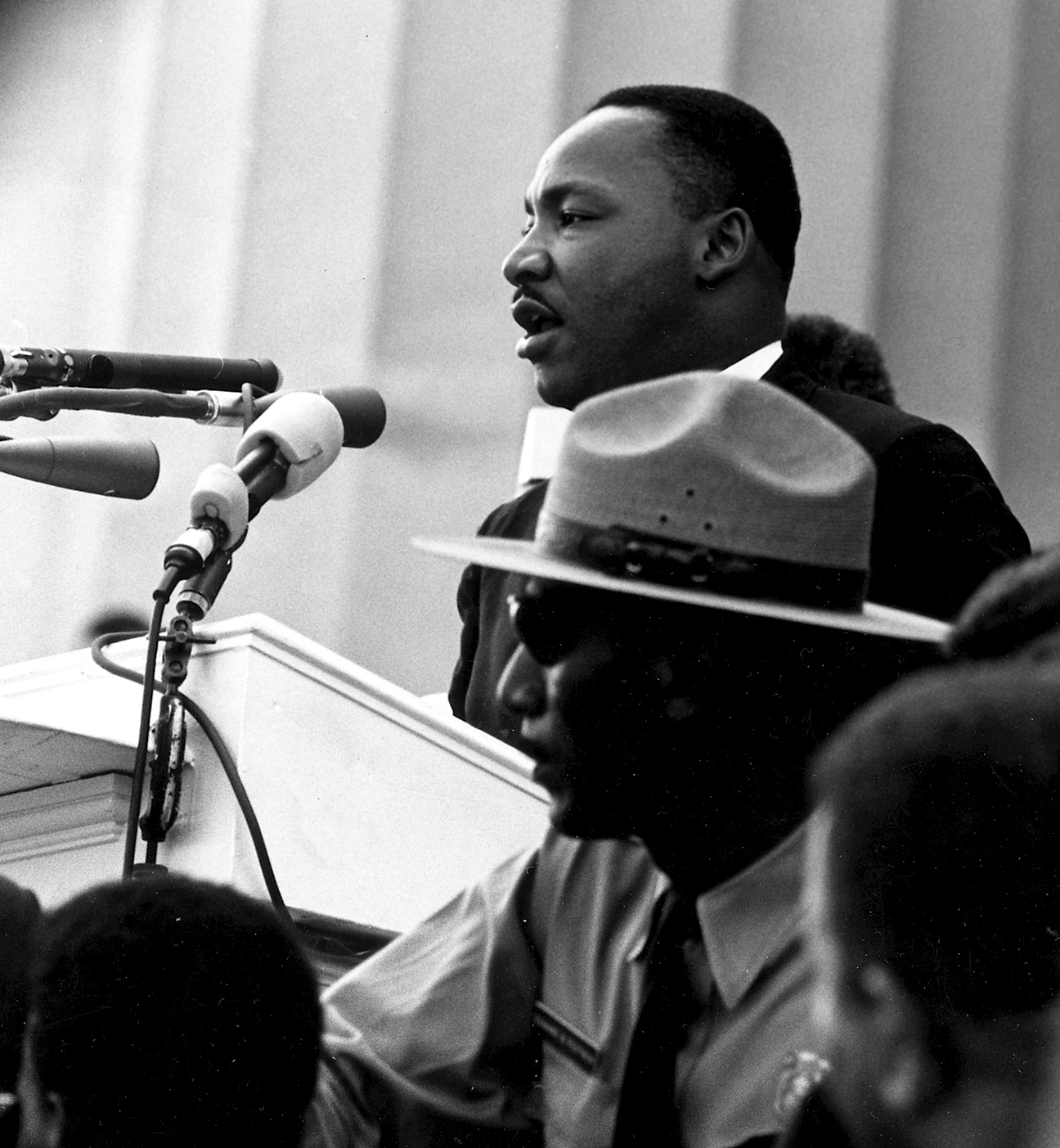
1963 is arguably the most pivotal year in the Civil Rights Movement.  From the assassinations of President John F. Kennedy and NAACP field secretary Medgar Evers to Martin Luther King, Jr.’s I Have a Dream speech at the March on Washington, the year was filled with events and people who were crucial to the movement’s success.   

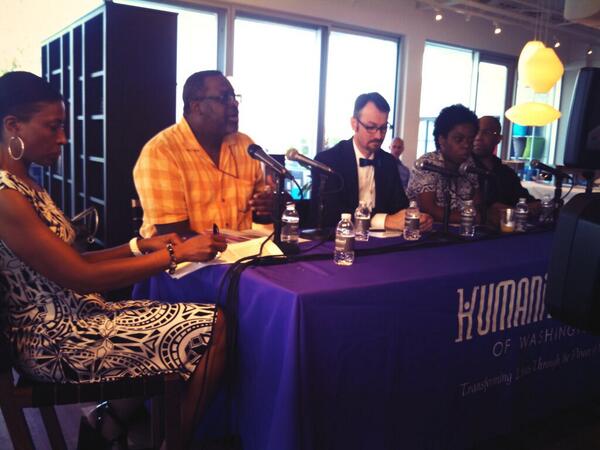
Fifty years later, the Humanities Council of Washington, D.C., in partnership with the Andrew Young Foundation and CRP, Inc., sought to commemorate that year on Monday, Aug. 26, at the law offices of Hogan Lovells through a program featuring Ambassador Andrew Young, famed civil rights pioneer and icon.  The discussion was moderated by Dr. J. C. Hayward, D.C.’s first female news anchor and now Vice President of Media Outreach at W-USA TV-9.   

Titled “1963: Raising the Conscience of a Nation,” the evening debuted Part One of the documentary 1963: The Tipping Point produced by Young.  The film focused on the movement in Alabama during that tumultuous year, in particular the impact made by the late Rev. Fred Shuttlesworth, co-founder of the Southern Christian Leadership Conference, in Birmingham.  

 “The program exceeded my expectations,” said attendee Eric Chambers.  “I thought I knew everything about the Civil Rights Movement but I learned a lot -- in particular about the movement in Albany that Mr. Young described as a failure.”  

In the documentary Young admitted initial civil rights activity in Albany, Ga.., went unnoticed by most of America due to lack of media coverage until  Dr. King decided to participate.  Yet, even with Dr. King’s involvement, the Albany Movement had limited success.  Almost a year of demonstrations resulted in very few concessions made to desegregation, and most of those were abandoned once King left.  When Shuttlesworth invited King to Birmingham, King and other leaders hoped to apply the lessons he learned from Albany to the demonstrations there.  Birmingham City Commissioner Eugene “Bull” Connor became the symbol of racism in Birmingham. Connor’s vicious use of dogs and firehouses in thedemonstration in Kelly Ingram Park composed primarily of high school students spurred national outcry.  It is believed that the Birmingham Movement led to the passing of the Civil Rights Act of 1964 and the Voting Rights Act of 1965.  
Young, then a 31-year-old pastor in Atlanta, Ga., and member of the SCLC, participated with Shuttlesworth and King in the Alabama movements.  During the program, he admitted that what’s missing by most historical recollections of the time was the anxiety that most of his friends and clergy felt.  

“We made it look fun,” Young said.  “But, most people thought going to Birmingham was a death sentence…. None of us thought we’d see forty.”  

Following the Civil Rights Movement, Young served as a member of the House of Representatives from 1973 to 1977, was appointed Ambassador to the United States by President Jimmy Carter in 1979, and then served as the mayor of Atlanta from 1982-1990.  Even now, he is still involved in social and political issues and feels progress is still to be made, in particular in the economic and judicial arenas.  

Like Young, many attendees of the program agreed that  progress still needs to be made.  

“I wasn’t oblivious to racism,” said H. Clifton Grandy of his experiences as a child.  “I tasted  it but I didn’t have to taste the full bitterness of it.”  

Grandy, coordinator of the National Consortium of Racial and Ethnic Fairness in the Courts and third-generation Washingtonian, was a child during the 1963 movement and is amazed at how his parents protected him from the harshness of racism.  But he concedes there is still more to do.    

 “One of today’s tipping points is that the work for fairness and equality in the court system continues,” he said.  “We need an examination of the justice system, of Trayvon Martin’s case, of implicit bias.”

Nancy Lucas, of Ward 4, is motivated by civil rights because both her parents attended the 1963 March on Washington.  But she said she’s still waiting to be judged by the content of her character and not the color of her skin.  

“[African-Americans] are still not well represented in any large body, especially the educational system,” said Lucas.  

Humanities Council Chair Bradford Grant is optimistic. The recent 50-year anniversary March on Washington has brightened his hopes of the future.  

“During the first March on Washington, women weren’t allowed to speak,” said Grant.  “And we weren’t even about to bring up LGBT issues.  But this past weekend was so inclusive.  That’s how it’s becoming.  Now you no longer have to think to include a group.”  

Guest attendees included members of the Young family including his wife, Carolyn; his daughter, Andrea, who is Executive Director of the Andrew Young Foundation; Councilmember Anita Bonds, and George Turner, Chief of Police of the Atlanta Police Department.  


Monday, July 22, 2013

Arts and Humanities Fest Comes to St. Elizabeths East in Ward 8

Four Separate Days of Food, Fun, and Summer Activities, All FREE to the Public!

The Humanities Council of Washington, DC and Building Bridges Across the River at
THEARC recently announced the kick–off of the Arts & Humanities Festival at St. Elizabeths East to be held on Saturday, July 27, 2013. Made possible through a grant awarded by the Office of the Deputy Mayor of Planning and Economic Development, the festival will be held over four separate days with a culminating event on Saturday, August 24, 2013. The festival is free and open to the public.

The heart of the festival is located on the grounds of one of the District’s most prized historic sites, St. Elizabeths East, in the 1100 block of Alabama Avenue SE. The East Campus will soon be the home the Gateway Pavilion which will serve as a focal point for the St. Elizabeths East Innovation Hub which will begin to take shape in August 2013. The Pavilion will host concerts, community events, and festivals, as well as corporate meetings, trade shows, and conferences.

The Arts & Humanities Festival is the perfect event to celebrate the communities, history and heritage of DC and Ward 8, while embracing the changes to the historic St. Elizabeths East campus, still the home to the first federally operated psychiatric hospital in the United States. 

Festival events will kick-off on Saturday, July 27th, followed by a summer celebration weekend on Saturday and Sunday, August 17th and 18th, and a closing event on Saturday, August 24th. Each Festival day will be held from 11:00 a.m. to 4:00 p.m. and feature an exciting scope of activities, live performances, art exhibits, readings and workshops and other exciting activities that will be fun for
the entire family. 

Attendees will have the opportunity to whet their appetites with a variety of food. An opening ceremony with Mayor Vincent C. Gray is scheduled for Saturday, July 27th at 1pm.

“The overwhelming support from the community and our partners is paralleled by our ongoing commitment to create platforms to experience the best of Ward 8 and engage its residents to help shape that vision,” said Catherine Buell, Executive Director of St. Elizabeths East. 

This kick-off Festival event line-up includes special appearances by emerging urban vocalist IhsAn Bilal, Rapper, AB The Producer, Anthony Anderson and the cast of Anacostia – The Series, and the East of the River Boys and Girls Steelband. Special narratives provided by noted author, Dr. Courtney Davis, Jay Coleman and master storyteller the Honorable Baba-C, Griot. Additional artists will participate in the events held on Saturday, August 17th, Sunday, August 18th and Saturday, August 24th. 

For more information on the upcoming Arts & Humanities Festival at St. Elizabeths East, please visit us at www.ahfest.com, follow us on Facebook (www.facebook.com/ahfestdc) and Twitter (@AHFest_DC.)

Tuesday, July 16, 2013

Who's a Washingtonian? Grant To Bridge DC's Invisible Divides

Grant Requires New Collaboration Between Two or More Geographic or Cultural Groups

Who's a Washingtonian? Grants ($5000) Current Deadline - Proposals Due: September 1

Visit http://www.wdchumanities.org/grants/deadlines to register for a FREE Humanities Council grants workshop or visit http://grantapplication.wdchumanities.org to begin an online application now.

The Humanities Council requests proposals for grant projects that actively seek to spark dialogue between groups of residents that have historically been isolated from one another either geographically or culturally. Using the humanities disciplines as lenses, these projects will help Washingtonians better understand the ties that bind them such as music, literature, history, religion, and language. 

Each "Who's a Washingtonian?" grant proposal must feature the following three components...

1. A clearly articulated effort to link two geographic or cultural groups in the city that rarely come in contact with one another.

2. A clearly defined theme, explored through the humanities disciplines, that the two groups will explore collaboratively. 

3. A "civic reflection" component. 
Civic reflection discussions have three elements – a group of people, the civic activity they are involved in, and an object (usually a short reading, image or video). We begin by talking about the object in front of us, the thing we share and have in common, and gradually open up into larger questions of civic engagement, social justice, and the work we do in the world. 
- From the Center for Civic Reflection (civicreflection.org)

Examples of potential projects may include:
  • Two geographically distant neighborhoods may simultaneously create traveling exhibits on their history and culture and trade them with one another upon completion.
  • Long time residents and recently arrived residents may produce an oral history project through which they seek to examine one another’s goals, motivations, and cultures.
  • Several religious organizations may host an interfaith conference during which they may discuss their perspectives on the challenges currently facing the DC community
  • Book clubs from different neighborhoods may create a project wherein they celebrate their mutual appreciation of a particular work or genre

Tuesday, July 2, 2013

A Few Thoughts on Last Week's DC Community Heritage Project Symposium

Insightful commentary on last week's event from Humanities Council Grants and Special Projects Intern, Sneha Sharma

Washington D.C. residents don’t always have all that much in common with one another. They come from different cultures, backgrounds, and hold a diverse array of professions. Some residents have lived here their whole lives and others just moved in. Often, one of the only things these residents hold in common with one another is the history that surrounds them. Washington D.C. has a rich and extensive history that visually reveals itself through the mix of old and new architecture and the plethora of museums. In order to find a collective sense of community, residents ideally should understand this shared history. 

Not only did the panelists at last week's DC Community Heritage Project Symposium address these abstract ideas, they also discussed the importance of architecture and urban planning in relation to community. Throughout history, racism and rising property prices displaced residents and disrupted any shared sense of community that previously existed. In the present society, residents’ common knowledge of these past events can strengthen their understanding of the community and of each other. Since all the panelists possess strong community ties, they ably discussed how their interactions and work within the community improved when residents identified with their community’s history. Through their statements during the discussion, these panelists all reinforced the idea that a community’s history is always relevant to the present residents whether these residents have been here for five or fifty years. 

After the discussion, I realized that these speakers would never have come together if not for the city’s history that they are all so invested in. This demonstrates the strong sense of community that history can help create. The panel itself was well attended and was followed by a Q and A session where some attendees voiced their personal experiences and opinions in relation to the discussion topic.

(Sharma is a student at The University of California Riverside and is currently studying at the University of California DC Center)

Thursday, June 20, 2013

Announcing this Year's DC Community Heritage Project Grant Award Winners

$36,000 Awarded for 18 Projects Spanning Every Ward in the City

Congratulations to these 18 outstanding organizations! Each one is working to document, preserve, and share the history of Washington, DC's neighborhoods, landmarks, and culture. 

Logan Circle Community Association, “Logan Circle Heritage Trail Education Curriculum”

The Logan Circle Community Association (LCCA) will, with Garrison Elementary School, Cultural Tourism DC (CTDC), and instructional specialist Chris Magnuson, develop a curriculum outline for 4th and 5th graders that will accompany the forthcoming Logan Circle Heritage Trail. The Heritage Trail, which will be dedicated on July 13, 2013, highlights the civic and cultural history of the Logan Circle neighborhood via beautifully crafted signs that will be mounted on public property along 15 stops throughout the Logan Circle neighborhood.

Chowan Discovery Group, "The Gold Coast"

Chowan Discovery Group will produce a 15-25 minute documentary about Washington, DC's upper 16th Street, NW neighborhoods of Crestwood, Shepherd Park, Colonial Village and North Portal Estates during the period of the 1950's to the 1990's, when most of the population was made up of African-American leaders in the areas of law, education, healthcare, government administration, military and business. The film will include interviews with residents of multiple generations. 

Crestwood Citizens Association, "Crestwood History Project"

The Crestwood History Project will publish a book tracing the little-known history of a neighborhood united within consistent boundaries since its first survey in 1720. This published history, full of photos, drawings and maps, will not only provide Crestwood residents with an enhanced sense of community, it will help give the neighborhood its place in DC history alongside nearby areas that have been better documented.

Paul Laurence Dunbar High School
Paul Laurence Dunbar High School Convocation and Alumni Federation, "Dunbar High School Student Project on Dunbar Alumni Legends and Pioneers"

This exciting new project will engage students at Paul Laurence Dunbar High School in a range of educational, research and training experiences providing skill sets that will be beneficial in college and in any work environment. Students will research and identify Dunbar alumni and faculty that have made historically significant and vital contributions to the District and nation. 

Anacostia Community Outreach Center, "The Langston Terrace Dwelling Oral/Video History Project"

The Langston Terrace Dwelling Oral/Video History Project will give the Langston Dwelling Summer campers an opportunity to learn, witness and embrace the importance of the history of their community. The young people will research the history of Langston and interview, photograph and video artifacts of several residents and other stakeholders of the community to be included in the final presentation. The final presentation will include a program open to the community that will feature a showing of the finished product at the Anacostia Community Outreach Center office.

Female Union Band Society, "Mt. Zion/Female Union Band Historic Memorial Park Foundation Website Development Project"

The Foundation seeks funding to hire a web designer to design and launch a website for the Foundation. The website will be a valuable tool for the Female Union Band Society as they work to increase visibility of the Mt. Zion and Female Union Band cemeteries and will also serve as  an effective means of distributing historical information to researchers, tourists, and the community. 

Neighborhood Farm Initiative, "DC Garden Oral History Project"

This oral history project will record interviews with older Washingtonians who have spent significant portions of their lives growing their own food and have participated in Washington's local food economy and culture. By conducting interviews with a diverse group of individuals across the District, they will document not only each gardener's individual story but also the culture, traditions, and practices of food-growers in this city. Interview questions will be geared towards capturing the ways that food has connected people in their neighborhoods and communities at different points in history. 

Deanwood Heights Main Streets, "Master Builders of Deanwood"

Deanwood Heights Main Streets (DHMS) will host a Saturday seminar and screening of Michelle Jones' latest film about African-American architects and their work in DC. The seminar will focus primarily on examining the stories of the architects who lived and worked in Deanwood. 

African American Holiday Association, "African American Pioneer Muslimahs in Washington, DC (Part Two)"

This project is Part Two of the first documentary completed in 2011 through a grant from the Humanities Council of Washington, DC.The producer will conduct another set of interviews with four or five elderly African American Muslim women (Muslimahs) who were not included in the first film. The project's goal is to tell the history of these "sisters" in their 80's and 90's, including the challenges they faced as they converted to a religion and way of life that seemed "foreign" to many. Some of these Muslimahs helped to build DC's only "temple," now the masjid, from the ground up.

Universal Negro Improvement Association Historical Society, Inc., "The Impact of Marcus Garvey and the UNIA in Washington DC"

This three day project will feature an exhibit, discussion, and tours on impact of Marcus Garvey in Washington, DC. All of the programs will be held at the Americas Islamic Heritage Museum in Historic Anacostia.

Black Student Fund, "Remembering the Dream Makers of Black Student Fund"

Black Student Fund (BSF) scholars will archive, research, and document the history of BSF. The research will focus on the organization's leadership and its impact on the DC independent school community. As part of the project, BSF will produce a video on archival and historical research techniques to guide the young scholars in their work. The project will be conducted in preparation for the organization's 50th anniversary in 2014.

Henson Arts in Learning, "Citizens We"

The Citizens We Project is a photographic portrait of the people in the neighborhoods of Adams Morgan, Mt. Pleasant, and Columbia Heights in Washington, DC conducted in partnership with the Shrine of the Sacred Hear Dinner Program. The project will consist of an exhibition of thirty 17 x 25 inch black & white prints of clients from the Shrine of the Sacred Heart Dinner Program, and an online publication about the Dinner Program and the challenges of immigration in contemporary American society. The publication will be available online for free and sold as a soft cover book.

ANC7B, "We are Fairfax Village"

“We are Fairfax Village” is a project working to document the extensive history of the Fairfax Village neighborhood. The mission is to: 1) pursue and value the oral histories of past and current residents of Fairfax Village, 2) perform historical research of various resources related to Fairfax Village, 3) work collaboratively to author, illustrate, and share documents in accessible and user-friendly ways. 

WSC Avant Bard, "Kendall Green and the National College for the Deaf"

WSC Avant Bard will develop a play that explores the history of deaf culture and the history of Kendall Green. The play will be researched by professional scholars and written to convey the history of this often ignored piece of DC's historical narratives to a diverse audience.

All African People's Development and Empowerment Project, "Marcus Garvey Enrichment School Documentary Project"

The Marcus Garvey Enrichment Documentary Project will work with African American youth living in the Barry Farms community of Washington D.C. Youth from the ages of 13-18 will produce a documentary about the historical Barry Farms community, its current social history, and the thriving culture that highlights the positive culture of Barry Farms, but also the historiography of Southeast, Washington D.C. The initial phase of this project seeks funding for research and development of a proposed documentary that audio-visually depict the rich, but under-represented African American youth’s perspective on the current issues of Barry Farms and the broader African American Washington, D.C. community. 

Military Road School Preservation Trust, "Oral History of the Military Road School Alumni before 1954"

As part of the Sesquicentennial observance of the Military Road School, a video of oral histories provided by alumni who lived in the Brightwood community as well as nearby Maryland and attended the School from the 1930's to 1954 will be developed for the purpose of corroborating the educational legacy for which it was well known until closing as a D.C. public school in 1954.
The oral history collection will be accessible to the general public online as a resource that will enable students, teachers, and a wide range of ordinary citizens to witness the academic, social and cultural aspects of what school life was like for preceding generations of African-Americans.

Community Resources Incorporated, "A Loud Silence: A Visual Code on the Underground Railroad"

The Song Yet Sung, by James McBride is the most lyrical, profound, and mystical rendition of the enslavement experience because it centers around, and depicts the use and power of “The Code”, a complex system of signs, symbols, and markers as well as the individuals who connected them to one another and who created a path for enslaved people seeking freedom.This project will research the Underground Railroad in DC, obtain maps of the topography and terrain at the time, create mixed media work depicting the markers, codes, symbols and signs uncovered, and tell the story of their composition, creation, use and meaning.

Rehoboth Baptist Church Historical Committee, "Documenting History of Rehoboth Baptist Church (150 Years)"

Rehoboth Baptist Church will gather, organize, catalog, and archive materials to prepare a comprehensive book on the history and life of Rehoboth Baptist Church (1864-2014). The Rehoboth Baptist Church was founded by former slaves and is one of the oldest Black Baptist Churches in the city.

Join us in December when each of these projects will be presented at the DC Community Heritage Project Showcase!

Tuesday, May 28, 2013

Conversations on Great Streets: It's All About the H!

Honoring Jane Lang and Ann Belkov of the Atlas Performing Arts Center, Anwar Saleem of H Street Mainstreets, Betty Hart of With These Hands Salon, and Leon Robbins of Stan's Discount Clothing

Purchase Tickets Today at http://conversationsongreatstreet.eventbrite.com

This Thursday, the Humanities Council is celebrating the past and present of H Street NE! Each year the Council selects one of the city’s most vibrant and storied commercial corridors and honors longtime and newly arrived business leaders working to make their neighborhoods great! In 2011 we honored U Street, NW, and last year’s “great street” was Georgia Ave, NW. This year’s honorees are: Jane Lang and Ann Belkov of the Atlas Performing Arts Center, Anwar Saleem of H Street Mainstreet, Betty Hart of With These Hands Salon, and Leon Robbins of Stan’s Discount Clothing! 

http://www.speakeasydc.com/
The honorees will be introduced by special guest Tommy Wells, DC City Councilmember for Ward 6, and each will tell their story in the ever-entertaining style of SpeakeasyDC! For the past few weeks, volunteer storytellers from SpeakeasyDC have coached the honorees, and we can’t wait to hear them reminisce about H Street!

Belkov will accept the award on behalf of the Atlas Performing Arts Center. She is on Atlas’ Executive Committee, and its Board of Directors. She has a long history with the organization, as she was one of the National Parks Service rangers on hand to dedicate the Atlas as a historic property on the National Register of Historic Places.

As the Executive Director of H Street Main Street, Saleem has helped attract over 100 new businesses and 1500 new jobs to the historic commercial corridor. He is as dedicated to the community as he is to the revitalization of businesses in the neighborhood.

Hart’s beauty salon, With These Hands, has been a fixture on H Street for nearly 30 years. She has trained
H Street Festival; Image Courtesy afar.com
countless hairstylists, won numerous awards for customer satisfaction, and always gives back to the community that has supported her and her business since 1984!

Robbins’ clothing store, Stan's Discount Clothing, has been a popular H Street establishment for 23 years, but it has roots in DC that go even deeper. His father Stan founded the business in 1947 at 9th and M Streets NW, later moving it to Chinatown, before Leon finally established it in its current location at 832 H Street, NE.

The evening will feature an open bar as well as food from sponsors Sticky Rice DC and Inspire BBQ. Tickets are only $50 each and the proceeds will benefit the Humanities Council of Washington, DC and its mission to transform lives through the power of the humanities! 

Visit http://conversationsongreatstreet.eventbrite.com to purchase tickets today. 

Conversations on Great Streets: It's All About the H is sponsored by:


Tuesday, February 12, 2013

New Grant Cycle to Support Commemoration and Remembrance

Proposals are Due March 11

Commemoration and Remembrance Grant Opportunity

Beginning this year, in partnership with the DC Commission on the Arts and Humanities, the Council will offer 5 grants of $2000 each to organizations and qualifying individuals developing projects that commemorate and remember local and national histories. Commemoration, though almost always celebratory, works in the intellectual sphere much the same way historic preservation does in the physical. If memories can only be preserved by remembering so collective memory can only be preserved by commemoration. 

Though history will always remember DC as the testing ground for emancipation, it is the ritual commemoration of Emancipation Day that makes it an integral part of the city's culture and character. A statue in a local park may provide its subject with an aesthetic sense of immortality, but  it soon becomes merely decoration unless the meaning behind the bronze is consciously remembered through ceremonies, parades, and other traditions. 

The people, events, and sites a public chooses to remember and commemorate can say more about the current community than the remembered past. What histories do we choose to commemorate? Why do we commemorate them the way we do? What messages do we hold on to so that we may apply them dutifully to our daily lives? 

Help us answer these questions while preserving the collective pasts important to the people of Washington. Visit grantapplication.wdchumanities.org and start your grant proposal today. A preliminary application is not required for the Commemoration and Remembrance grant, the final proposal is due on March 11 at midnight.

Small Grants (Also due March 11)

The Council awards small grants in amounts up $1500. These grants are often used to support planning, research, or the early stages of larger endeavors. Like the Major grant, this opportunity is for projects that bring the humanities to the people of Washington, DC. The online application can be found at grantapplicaton.wdchumanities.org.